RA 11314: Student Fare Discount Act: Complete Guide For Students 2026
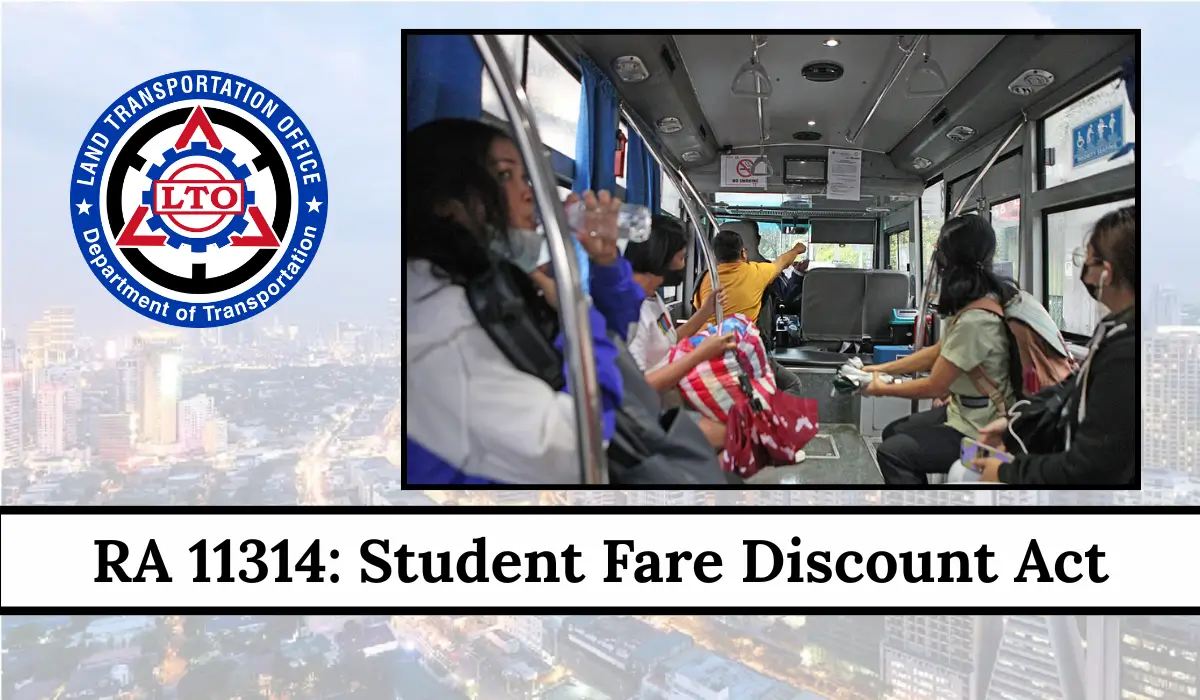
RA 11314: Student Fare Discount Act. For many students, going to school every day is not easy. It is not just about studying, exams, or homework. There is also the daily struggle of transportation. Every ride whether by jeepney, bus, or train—costs money. These small fares may seem simple, but over time, they become a heavy burden, especially for students coming from low-income families.
This is where RA 11314: Student Fare Discount Act becomes very important. This law was created to help students save money on transportation so they can focus more on their education. It ensures that students can travel to and from school without worrying too much about expenses.
This article will explain everything about the law in simple way, including its meaning, benefits, rules, eligibility, penalties and tips.
What Is RA 11314: Student Fare Discount Act?
RA 11314, also known as the Student Fare Discount Act, is a law in the Philippines that gives students a 20% discount on public transportation fares.
It was officially signed into law on July 17, 2019, and since then, it has helped millions of students reduce their daily travel costs.
Simple Explanation
The rule is very simple:
- If you are a student, you can pay less for transportation.
- You just need to show your student ID or proof of enrollment.
This law applies to different types of transport like:
- Jeepneys
- Buses
- Trains
- Ships and ferries
- Other public vehicles
The main purpose is clear: Make education more affordable by reducing travel costs.

Purpose of the Student Fare Discount Act
This law was not made just to give discounts. It has bigger goals that help students and society.
Main Objectives
- Make transportation affordable for students
- Help poor families support their children’s education
- Encourage students to attend school regularly
- Reduce financial stress on parents
- Promote equal access to education
Why It Is Important
Education is very important for every country. But many students struggle because of daily expenses. Transportation is one of the biggest costs.
This law helps solve that problem by giving students a fair chance to study without worrying too much about money.
Key Features of RA 11314
1. Coverage
The law covers students from different levels:
- Elementary students
- High school students
- Senior high school students
- College students
- Technical and vocational students
This means almost all regular students can benefit from it.
2. Discount Rate
Students are entitled to:
- 20% discount on regular fares
This discount applies to most public transportation. Even though 20% may seem small, it becomes a big saving when used every day.
3. Modes of Transportation Covered
The discount applies to many types of transport:
- Jeepneys
- Buses
- UV Express
- Trains (MRT, LRT, PNR)
- Taxis and ride services
- Ships and ferries
- Tricycles (depending on local rules)
This wide coverage makes it easier for students to travel anywhere.
4. Student Identification Requirement
To get the discount, students must show:
- Valid school ID, or
- Proof of enrollment
This is important because it confirms that the person is really a student.
5. Responsibilities of Schools
Schools play an important role in this law. They must:
- Provide valid student IDs
- Ensure student records are updated
- Help students prove their enrollment
Without proper ID, students cannot claim the discount.
6. Responsibilities of Transport Providers
Drivers and operators must:
- Give the correct 20% discount
- Respect student rights
- Follow the law at all times
If they fail to do so, they will face penalties.
7. Implementing Rules and Regulations (IRR)
The law includes detailed rules called IRR. These explain:
- How the discount works
- Who qualifies
- How to apply it
- What penalties apply
These rules help ensure smooth implementation.
Who Can Avail the Discount?
Not everyone can get this benefit. There are clear eligibility rules.
Eligible Students
You must be:
- A Filipino student
- Enrolled in a recognized school
- Studying in the Philippines
Covered Institutions
- Elementary schools
- High schools
- Colleges and universities
- TESDA or vocational institutions
Not Covered
The following are usually not included:
- Postgraduate students (Master’s, Doctorate, Law)
- Individuals not currently enrolled
How to Avail the Student Discount
Getting the discount is very easy.
Step-by-Step Process
- Go to any public transport
- Inform the driver or conductor that you are a student
- Show your valid ID or proof of enrollment
- Pay the discounted fare
That’s it simple and quick.
Important Tips
- Always carry your student ID
- Make sure your ID is valid and clear
- Renew your ID if needed
Scope of the Discount
The discount applies in many situations.
When You Can Use It
- Regular school days
- Summer classes
- Remedial classes
As long as you are officially enrolled, you can still use the discount.
Where It Applies
- Daily commute to school
- Travel for school activities
- Educational trips
This helps students stay active in school life.
Challenges in Implementation
Even though the law is helpful, there are some problems.
Common Issues
- Some drivers refuse to give discounts
- Lack of awareness among students
- Weak enforcement in remote areas
- Difficulty in reporting violations
Why These Issues Exist
- Not all drivers know the law
- Some try to avoid giving discounts
- Students may not know their rights
Solution
- Increase awareness
- Stronger enforcement
- Easy reporting system
Penalties For Non-Compliance
The law includes strict penalties for those who do not follow it.
For Drivers (Land Transport)
- 1st offense: 1-month license suspension
- 2nd offense: 2-month suspension
- 3rd offense: 3-month suspension
- Additional offenses: fines + suspension
For Operators
- ₱5,000 fine (1st offense)
- ₱10,000 + vehicle impound (2nd offense)
- ₱15,000 + cancellation of permit (3rd offense)
For Sea Transport
- ₱5,000 (1st offense)
- ₱10,000 (2nd offense)
- ₱20,000 (3rd offense)
For Air Transport
- ₱50,000 (1st offense)
- ₱100,000 (2nd offense)
- ₱150,000 (3rd offense)
For Rail Transport
- Fines and sanctions based on rules
- Possible cancellation of operations
Use of Fake Student ID
This is a serious offense.
If someone:
- Uses fake ID
- Pretends to be a student
They may face:
- Loss of discount privilege
- Legal penalties
Where to Report Complaints
If a student is denied the discount, they can report it to:
- LTFRB (land transport)
- MARINA (sea transport)
- CAB (air transport)
- DOTr (rail transport)
- Local government (tricycles)
These agencies will take action against violators.
Benefits of RA 11314
This law has many advantages.
For Students
- Saves daily expenses
- Helps attend school regularly
- Reduces stress
For Families
- Less financial burden
- Better support for education
For Society
- More educated population
- Equal opportunities
- Better future workforce
Tips for Students
To fully enjoy the benefits, follow these tips:
Stay Updated
Always check updates about the law.
Carry Your ID
Never forget your student ID.
Be Respectful
Always ask politely for your discount.
Report Violations
If denied, report the issue.
Help Spread Awareness
Tell other students about their rights.
Important Notes
- RA 11314 was enacted on July 17, 2019 to provide student fare discounts in the Philippines.
- It is actively implemented to reduce transportation costs for students traveling to school.
- The law covers students from elementary, secondary, tertiary, and technical-vocational levels.
- Students are entitled to a 20% discount on regular domestic transportation fares.
- The discount may apply to land, air, sea, and rail transport depending on the service.
- Only enrolled students in recognized Philippine educational institutions can avail the discount.
- The law generally applies to Filipino students who are currently studying.
- A valid student ID or proof of enrollment is required to get the discount.
- Schools are responsible for issuing proper identification cards to their students.
- Transport providers must strictly implement the student fare discount as required by law.
- Failure to follow the law can result in penalties, fines, or suspension of operations.
- The Implementing Rules and Regulations (IRR) provide detailed guidelines for proper enforcement.
- Cooperation between schools and transport operators is necessary for smooth implementation.
- Students can file complaints if transport providers refuse to give the discount.
- Awareness of the law helps students fully benefit from the fare discount system.
Why This Law Is a Big Help
Education should not be stopped because of money. Many students struggle daily just to attend classes. RA 11314 helps solve this problem by:
- Reducing transportation costs
- Supporting students financially
- Making education more accessible
It shows that the government values education and student welfare.
Future of the Student Fare Discount Act
The law is strong, but it can improve.
Possible Improvements
- Better monitoring systems
- Digital student verification
- Stronger penalties
- More awareness programs
Contact Information (For Complaints & Inquiries)
If you need more information or want to file a complaint related to the Student Fare Discount under RA 11314, you can contact the following government agencies:
Land Transportation Franchising and Regulatory Board (LTFRB)
For concerns related to land public transportation (except tricycles), you may reach out to LTFRB.
- Office Address: LTFRB Central Office, Brgy. Pinyahan, East Avenue, Quezon City
- Email: [email protected], [email protected]
- Facebook: fb.com/ltfrb.central.ph
- 24/7 Hotline: 1342
Department of Transportation (DOTr)
For railway transport complaints, contact the DOTr and ask for the Legal Service Department.
- Office Address: The Columbia Tower, Brgy. Wack-wack, Ortigas Avenue, Mandaluyong City, Philippines
- Official Website: www.dotr.gov.ph
- Trunkline: 8790-8300 / 8790-8400
FAQs About RA 11314: Student Fare Discount Act
What is RA 11314 and why is it important for students?
Ans: RA 11314, also known as the Student Fare Discount Act, is a law in the Philippines that gives students a 20% discount on public transportation fares. It is very important because it helps reduce the daily expenses of students who travel to school. Many students rely on public transport like jeepneys, buses, and trains, and these costs can become heavy over time. By providing a discount, the law supports students in continuing their education without financial stress. It also shows that the government values education and wants to make it easier for students to attend school regularly.
Who can avail the student fare discount under RA 11314?
Ans: The student fare discount is available to Filipino students who are currently enrolled in recognized schools within the Philippines. This includes students in elementary, high school, senior high school, college, and technical or vocational institutions. However, postgraduate students such as those taking master’s degrees, doctoral programs, or law are usually not covered. The purpose of the law is to support regular students who travel daily to attend classes, especially those who depend on public transportation.
What types of transportation are covered by the student discount?
Ans: RA 11314 covers a wide range of public transportation modes. Students can get discounts when riding jeepneys, buses, UV Express vans, taxis, trains like MRT, LRT, and PNR, as well as ships and ferries. In some areas, tricycles may also be included depending on local government rules. This wide coverage ensures that students across different regions can benefit from the law, whether they live in cities or provinces. However, some services like airplanes or private school service vehicles may not be included.
How much discount do students receive under this law?
Ans: Students are entitled to a 20% discount on regular public transportation fares. While this may seem like a small amount, it becomes very helpful when used every day. For example, students who take multiple rides daily can save a significant amount of money over a month. These savings can be used for other important needs such as food, school supplies, or projects. The discount is designed to ease the financial burden of transportation and make education more accessible.
What are the requirements to avail of the student fare discount?
Ans: To avail of the student fare discount, students must present a valid school ID or proof of enrollment. The ID should be clear, updated, and issued by a recognized educational institution. If the ID is expired, damaged, or unclear, the transport provider may refuse the discount. It is the responsibility of the student to always carry their ID when traveling. In some cases, additional documents like a registration form may be accepted as proof of enrollment.
When can students use the fare discount?
Ans: Students can use the fare discount during regular school days, as well as during summer classes or remedial sessions, as long as they are officially enrolled. This means the benefit is not limited to the main academic term. It helps students who continue studying during breaks or need to complete extra classes. The goal is to ensure that students always have support whenever they are traveling for educational purposes.
What should a student do if a driver refuses to give the discount?
Ans: If a driver or transport operator refuses to give the student discount, the student should remain calm and respectful. It is important to note the details such as the vehicle’s plate number, route, and time of the incident. After that, the student can report the issue to the proper authorities like LTFRB, DOTr, or other related agencies. Reporting violations helps improve the system and ensures that other students will not face the same problem in the future.
What are the penalties for transport providers who do not follow the law?
Ans: Transport providers who fail to give the student discount may face serious penalties. These include fines, suspension of driver’s licenses, impounding of vehicles, and even cancellation of their permits or franchises. The penalties increase with repeated offenses. For example, a first offense may result in a fine, while repeated violations can lead to losing the right to operate. These strict penalties are meant to ensure that the law is followed properly.
Can someone use a fake student ID to get the discount?
Ans: No, using a fake student ID or pretending to be a student is illegal. Anyone caught using falsified documents or misrepresenting themselves may lose the privilege and face legal consequences. This includes possible civil and criminal penalties depending on the situation. The law is designed to help genuine students, so misuse of the benefit is taken seriously by authorities.
How does RA 11314 help students and society in the long run?
Ans: RA 11314 provides long-term benefits not only for students but also for society. By reducing transportation costs, it allows more students to attend school regularly and complete their education. This leads to a more educated population, which contributes to economic growth and development. Families also benefit because they spend less on daily expenses. In the long run, the law helps create equal opportunities for students and supports a better future for the country.
Conclusion
In conclusion, RA 11314, or the Student Fare Discount Act, plays an important role in supporting students by reducing their daily transportation costs. This law helps make education more accessible and affordable for many families. By providing a 20% fare discount, it eases financial pressure and encourages students to attend school regularly. Although there are some challenges in its implementation, awareness and proper enforcement can improve its effectiveness. Overall, this law is a valuable step toward giving every student a fair opportunity to learn, grow, and build a better future.