Penalty For No Early Warning Device (EWD) Violation 2026: Complete Guide To Fines, Rules And Safety Tips
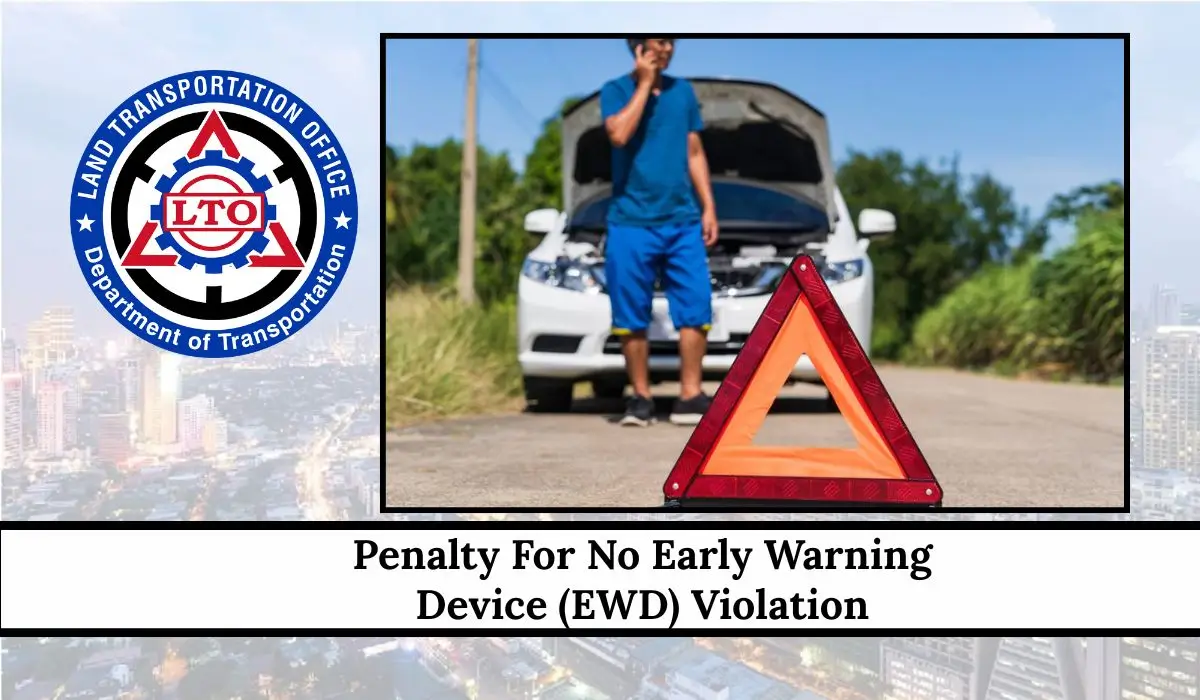
Penalty For No Early Warning Device (EWD) Violation 2026. Road safety is one of the most important responsibilities of every driver. No matter how experienced a person is behind the wheel, emergencies can still happen anytime. A flat tire, engine trouble, overheating, or sudden breakdown can occur even on well-maintained vehicles. When this happens on a busy highway or dark road, the situation can become dangerous very quickly. This is where an Early Warning Device (EWD) becomes extremely important.
Many drivers in the Philippines often ignore the importance of carrying an Early Warning Device inside their vehicle. Some think hazard lights are already enough. Others forget to bring their EWD after cleaning their car or transferring things to another vehicle. Unfortunately, forgetting this small safety tool can lead to traffic violations, fines, penalties, and even serious accidents.
In this detailed guide, you will learn everything about the penalty for no Early Warning Device violation in the Philippines, including the legal basis, fines, proper usage, benefits, requirements, installation tips, and ways to avoid getting penalized.
What is an Early Warning Device (EWD)?
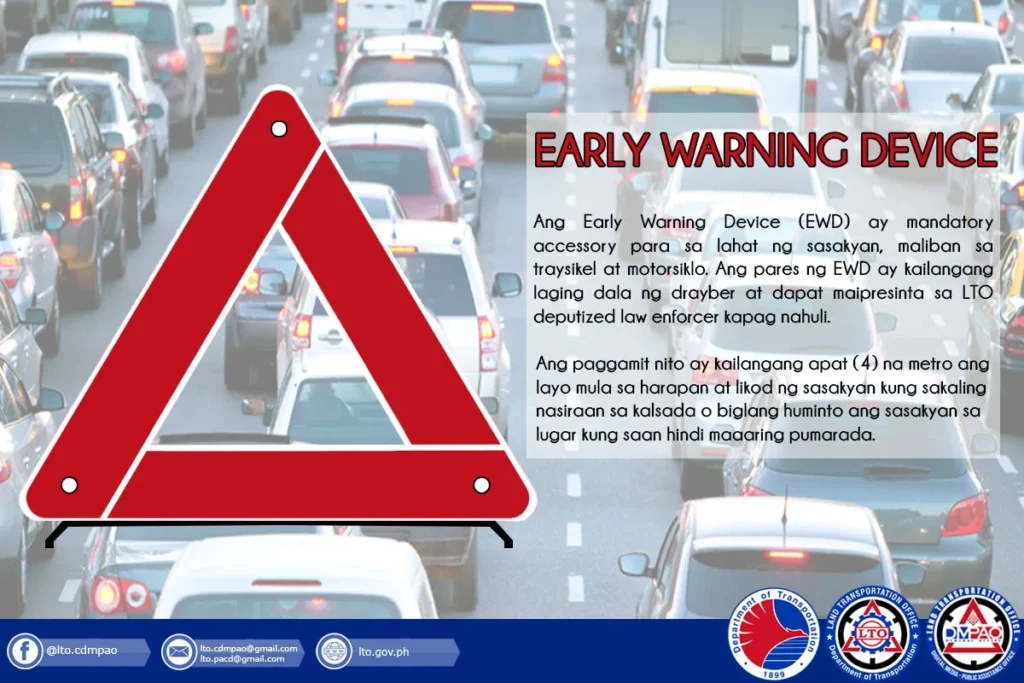
An Early Warning Device, commonly called EWD, is a road safety device used to alert other motorists when a vehicle is stalled, disabled, or stopped on the road due to an emergency.
It usually comes in the form of reflective triangular warning signs that are placed behind and in front of the vehicle. These triangles reflect light from headlights, allowing approaching drivers to notice the stopped vehicle from a safe distance. The main purpose of an EWD is simple:
- To warn other drivers
- To prevent accidents
- To improve road safety
- To give approaching vehicles enough time to slow down
Although it is a small safety tool, it plays a very important role during roadside emergencies.
Why Early Warning Devices are Important
Imagine driving on a dark highway late at night. Suddenly, the vehicle ahead stops because of engine trouble. If there is no warning sign on the road, approaching drivers may not notice the stalled vehicle immediately. This situation can easily lead to:
- Rear-end collisions
- Multi-vehicle accidents
- Serious injuries
- Traffic congestion
- Property damage
An Early Warning Device helps prevent these situations by giving advance warning to other motorists. The reflective triangles allow drivers to:
- Slow down safely
- Change lanes carefully
- Avoid sudden braking
- Prevent panic reactions
Even during daytime, heavy rain, fog, or low visibility conditions, an EWD can significantly reduce the risk of accidents.
Legal Basis of the Early Warning Device Rule
The requirement to carry an Early Warning Device in the Philippines is based on:
- Republic Act No. 4136
- Letter of Instruction No. 229
- LTO safety regulations and memorandum circulars
Under these rules, most motor vehicles must always carry a pair of Early Warning Devices.
This regulation was created to improve road safety and reduce accidents caused by stalled or disabled vehicles. The government considers EWD an essential safety requirement, which is why failure to comply is considered a traffic violation.
Vehicles Required to Have an EWD
Most motor vehicles in the Philippines are required to carry Early Warning Devices. These include:
| Vehicle Type | EWD Required |
|---|---|
| Private Cars | Yes |
| SUVs | Yes |
| Vans | Yes |
| Pickup Trucks | Yes |
| Buses | Yes |
| Trucks | Yes |
| Commercial Vehicles | Yes |
However, some vehicles are generally exempted, such as:
- Motorcycles
- Tricycles
Still, drivers should always check updated LTO guidelines for the latest rules and requirements.
Penalty For No Early Warning Device Violation
Drivers who fail to carry or use an Early Warning Device may face different penalties depending on the situation and violation committed. The usual penalties include:
| Violation | Possible Penalty |
|---|---|
| No EWD inside vehicle | ₱500 to ₱1,000 fine |
| Incomplete EWD pair | Fine and possible citation |
| Failure to deploy during breakdown | Additional fines |
| Accident caused by failure to use EWD | License suspension or revocation |
| Registration without EWD | Registration denial |
In some cases, authorities may also confiscate the driver’s license until proper compliance is shown.
Why Drivers Get Penalized
Many motorists think they only need an EWD if their vehicle breaks down. This is not true. Drivers can already receive a violation even if:
- Their car is functioning properly
- They are simply passing through a checkpoint
- They are undergoing routine inspection
The violation happens because carrying an EWD is mandatory.
Situations Where You Can Get an EWD Violation
You may receive an LTO violation under the following situations:
1. During Checkpoints
LTO officers or deputized traffic enforcers may ask drivers to present their EWD during routine inspections.

If you cannot show it, you may get fined.
2. During Vehicle Breakdown
If your vehicle suddenly stalls on the road and you fail to place your EWD properly, authorities may issue a violation.
3. During Registration Renewal
Some vehicles may not pass registration requirements if the required EWD is missing.
4. During Road Safety Operations
Authorities conducting safety operations may inspect safety equipment, including:
- Seatbelts
- Spare tires
- Fire extinguishers
- Early Warning Devices
Importance of Carrying an EWD at All Times
Keeping an EWD inside your vehicle provides many benefits beyond avoiding fines.
Safety Benefits
An EWD helps protect:
- Drivers
- Passengers
- Pedestrians
- Other motorists
Faster Driver Reaction Time
The earlier drivers notice danger ahead, the more time they have to react safely.
Reduced Accident Risk
Properly placed EWDs significantly lower the chances of rear-end collisions.
Better Traffic Management
EWDs help guide approaching traffic smoothly around disabled vehicles.
Emergency Preparedness
Road emergencies can happen anytime. Being prepared makes a huge difference.
Proper Way to Use an Early Warning Device
Knowing how to use an EWD properly is just as important as carrying one. Follow these steps during emergencies:
Step 1: Turn On Hazard Lights
Immediately activate your vehicle’s hazard lights after stopping.
Step 2: Place the First Triangle
Put the first reflective triangle around 4 meters behind the vehicle.
Step 3: Place the Second Triangle
Place the second triangle farther behind the first one. This gives approaching vehicles additional warning distance.
Step 4: Ensure Visibility
Make sure both warning triangles are clearly visible. Avoid placing them where:
- Bushes block visibility
- Curves hide the triangle
- Rainwater covers the reflector
Correct Placement Distance of EWD
The recommended placement distance is important for safety.
| EWD Placement | Recommended Distance |
|---|---|
| Front of Vehicle | Around 4 meters |
| Rear of Vehicle | Around 4 meters or farther |
Some situations may require even greater distances, especially on highways or fast-moving roads.
Common Mistakes Drivers Make
Many motorists still misuse Early Warning Devices. Here are some common mistakes:
1. Only Using Hazard Lights
Hazard lights alone are not enough. Other drivers may not notice them immediately, especially during bad weather.
2. Placing the Triangle Too Close
If the EWD is too close to the vehicle, approaching drivers may not have enough reaction time.

3. Using Low-Quality Reflectors
Cheap warning devices with weak reflectors may fail during nighttime.
4. Forgetting the EWD at Home
Some drivers remove their EWD while cleaning the car and forget to put it back.
5. Not Knowing How to Use It
Some motorists own an EWD but do not know the proper setup.
Specifications of a Proper Early Warning Device
The LTO has specifications for approved Early Warning Devices.
Shape and Design
- Triangular shape
- Collapsible structure
- Reflective surface
Color
Usually consists of:
- Red reflector
- Yellow reflector
Size
Each side should measure at least:
- 40 centimeters long
- 5 centimeters wide
Visibility
The EWD should remain visible from approximately:
- 400 meters away under high beam headlights
Weight Requirement
The device should weigh at least:
- 1.25 kilograms
This prevents it from falling over because of strong wind from passing vehicles.
Features of a Good Early Warning Device
A high-quality EWD should have the following features:
| Feature | Importance |
|---|---|
| Bright Reflectors | Better nighttime visibility |
| Strong Base | Prevents falling |
| Durable Material | Longer lifespan |
| Foldable Design | Easy storage |
| Weather Resistant | Reliable during rain |
Where to Buy Early Warning Devices
You can buy EWDs from several places in the Philippines.
Common Stores
- Auto supply shops
- Hardware stores
- Car accessory stores
- Gas stations
- Online marketplaces
Tips When Buying an EWD
Before buying, check the following:
- Reflective quality
- Stability
- Weight
- Durability
- LTO compliance
Avoid extremely cheap products because poor reflectors may not provide enough visibility.
Can Homemade EWDs Be Used?
Interestingly, some regulations do not strictly require specific brands. Homemade EWDs may be allowed as long as they follow required specifications regarding:
- Size
- Shape
- Visibility
- Reflective quality
- Stability
However, buying a professionally made EWD is still recommended for reliability and convenience.
Difference Between Hazard Lights and EWD
Some drivers think hazard lights can replace Early Warning Devices. This is incorrect.
| Hazard Lights | Early Warning Device |
|---|---|
| Attached to vehicle | Placed away from vehicle |
| May be difficult to notice | Visible from farther away |
| Uses battery power | No power needed |
| Limited warning distance | Longer warning range |
Both should be used together during emergencies.
Benefits of Early Warning Devices
1. Prevents Accidents
The main benefit is accident prevention.
2. Protects Human Lives
EWDs help save lives by warning approaching vehicles early.

3. Reduces Vehicle Damage
Preventing collisions also reduces repair costs.
4. Improves Driver Awareness
Road users become more cautious when they see warning signs.
5. Supports Safer Roads
Widespread EWD use contributes to national road safety efforts.
Consequences of Ignoring EWD Rules
Ignoring EWD regulations can lead to serious consequences.
Financial Penalties
Drivers may pay fines repeatedly.
License Suspension
Serious violations may lead to suspension.
Registration Problems
Vehicle registration renewal may become difficult.
Increased Accident Risk
The absence of warning devices increases danger for everyone.
What Happens If an Accident Occurs?
If a driver fails to deploy an EWD and an accident happens, authorities may consider the driver negligent. Possible consequences include:
- Higher penalties
- Longer license suspension
- Legal liability
- Insurance complications
In severe cases, licenses may even be revoked.
Why the Government Strictly Enforces EWD Rules
Road accidents remain a serious concern in many areas. The government enforces EWD rules because they help:
- Reduce collisions
- Improve emergency response
- Encourage responsible driving
- Protect road users
Safety regulations may seem simple, but they save lives.
Public Awareness About EWD
Many road safety campaigns encourage motorists to carry proper safety equipment. Authorities regularly remind drivers about:
- Proper EWD usage
- Correct installation
- Safety responsibilities
- Legal requirements
These educational efforts aim to reduce accidents nationwide.
How to Store Your EWD Properly
Proper storage helps maintain the condition of your EWD.
Best Storage Tips
- Keep it inside the trunk
- Avoid heavy objects on top
- Keep it dry
- Check reflectors regularly
Signs That Your EWD Needs Replacement
Replace your EWD immediately if you notice:
- Broken reflectors
- Cracked frame
- Rust damage
- Loose parts
- Weak visibility
Damaged EWDs may fail during emergencies.
Road Safety Tips for Drivers
Besides carrying an EWD, drivers should also follow other important safety practices.
Important Safety Reminders
- Check your vehicle regularly
- Maintain proper tire pressure
- Avoid overspeeding
- Keep emergency tools ready
- Follow traffic laws
- Stay alert while driving
Prepared drivers are safer drivers.
Emergency Items Every Vehicle Should Have
Aside from an EWD, vehicles should also carry:

| Emergency Item | Purpose |
|---|---|
| Spare Tire | Tire replacement |
| Jack | Lifting vehicle |
| Flashlight | Night emergencies |
| First Aid Kit | Medical emergencies |
| Fire Extinguisher | Fire safety |
| Jumper Cables | Battery problems |
Having these items can help during roadside emergencies.
Why Some Drivers Ignore EWD Rules
Despite the law, some drivers still ignore the requirement because:
- They think it is unnecessary
- They rely only on hazard lights
- They want to save money
- They forget to carry it
Unfortunately, these reasons can lead to dangerous situations.
How EWDs Help During Bad Weather
Rain, fog, and storms reduce visibility significantly. During these conditions:
- Vehicles become harder to see
- Stopping distance increases
- Accidents become more likely
Reflective EWDs provide extra visibility during poor weather conditions.
The Role of EWDs on Highways
Highways are especially dangerous during breakdowns because vehicles travel at high speeds. An EWD gives approaching drivers:
- More warning time
- Better visibility
- Safer lane-changing opportunities
Without proper warnings, highway breakdowns can quickly become deadly.
How Traffic Enforcers Check for EWD Violations
Traffic enforcers may inspect vehicles during:
- Checkpoints
- Routine inspections
- Registration verification
- Road safety campaigns
Drivers are usually asked to present their EWD immediately. Failure to do so may result in citation tickets.
Practical Tips to Avoid EWD Violations
Avoiding violations is actually very simple.
1. Always Carry Your EWD
Never remove it permanently from your vehicle.
2. Check It Regularly
Inspect the condition of the reflectors and frame.
3. Learn Proper Usage
Practice setting up your EWD before emergencies happen.
4. Replace Damaged Units
Do not use broken or faded warning devices.
5. Keep It Accessible
Store it somewhere easy to reach quickly.
Is the EWD Rule Worth Following?
Absolutely yes. The cost of buying an EWD is very small compared to:
- Traffic fines
- Accident expenses
- Vehicle repairs
- Hospital bills
- Loss of life
A simple reflective triangle can prevent serious tragedy.
Understanding Driver Responsibility
Driving is not only about reaching your destination. Every motorist has a responsibility to:
- Protect passengers
- Follow traffic laws
- Maintain road safety
- Prevent accidents
Carrying an EWD is part of responsible driving.
Future of Road Safety in the Philippines
As traffic continues to increase, road safety regulations become even more important. Authorities continue improving:

- Driver education
- Vehicle inspections
- Safety awareness campaigns
- Traffic law enforcement
Simple safety devices like EWDs will continue playing an important role in preventing accidents.
FAQs About Penalty For No Early Warning Device (EWD) Violation
What is an Early Warning Device (EWD)?
Ans: An Early Warning Device or EWD is a safety tool used for motor vehicles during emergencies. It usually comes as a pair of reflective triangular warning signs that are placed on the road when a vehicle breaks down or suddenly stops. The main purpose of an EWD is to warn approaching drivers so they can slow down, avoid accidents, and drive carefully. It is considered an important safety requirement in the Philippines because it helps protect both motorists and passengers during roadside emergencies.
Is carrying an Early Warning Device required by law in the Philippines?
Ans: Yes, carrying an Early Warning Device is required by law in the Philippines. According to LTO regulations and road safety rules under RA 4136 and Letter of Instruction No. 229, most motor vehicles must always carry a pair of EWDs. Drivers who fail to present an EWD during inspections, checkpoints, or emergencies may receive fines and penalties. The law was created to improve road safety and reduce accidents caused by stalled or disabled vehicles.
What is the penalty for not having an Early Warning Device?
Ans: The penalty for not having an Early Warning Device usually ranges from ₱500 to ₱1,000, depending on the violation and current LTO implementation. In some cases, authorities may confiscate the driver’s license until the driver can present a complete pair of EWDs. If the failure to use an EWD leads to an accident, the penalties may become more serious and could include license suspension or revocation.
When should an Early Warning Device be used?
Ans: An Early Warning Device should be used whenever a vehicle becomes stalled, disabled, overheated, or suddenly stops on the road due to an emergency. Drivers should immediately turn on their hazard lights and place the reflective triangles at a proper distance from the vehicle. This gives approaching motorists enough time to notice the danger and react safely. EWDs are especially important during nighttime, heavy rain, fog, or on busy highways where visibility may be poor.
Can hazard lights replace an Early Warning Device?
Ans: No, hazard lights cannot fully replace an Early Warning Device. While hazard lights help make the vehicle visible, they may not provide enough warning distance for approaching drivers, especially on dark roads or highways. An EWD is placed farther away from the vehicle, allowing motorists to see the warning earlier and slow down safely. For maximum safety, both hazard lights and EWDs should be used together during roadside emergencies.
How many Early Warning Devices should a driver carry?
Ans: Drivers are generally required to carry one complete pair of Early Warning Devices inside their vehicle. These usually include two reflective triangular warning signs. Having a complete pair is important because one triangle may be placed near the front while the other is placed behind the vehicle for better visibility and safety. Carrying incomplete or damaged EWDs may still result in violations and penalties.
Where can drivers buy a good Early Warning Device?
Ans: Drivers can buy Early Warning Devices from auto supply stores, hardware stores, car accessory shops, gas stations, and online marketplaces. When buying an EWD, it is important to choose one that is bright, reflective, durable, and stable. Cheap products with weak reflectors may not provide enough visibility during nighttime or bad weather conditions. It is always better to invest in a quality EWD for better protection and safety.
Are motorcycles required to carry an Early Warning Device?
Ans: Motorcycles and tricycles are generally exempted from the Early Warning Device requirement in the Philippines. However, most four-wheel vehicles and larger motor vehicles are required by law to carry EWDs at all times. Even if some vehicles are exempted, practicing proper road safety and carrying emergency tools is still highly recommended for all motorists.
What happens if a driver fails to use an EWD during a breakdown?
Ans: If a driver fails to use an EWD during a vehicle breakdown, they may receive additional penalties from the LTO or traffic authorities. More importantly, the lack of warning signs increases the risk of accidents because approaching drivers may not notice the stopped vehicle immediately. If this failure results in a collision or injury, the driver may face larger fines, license suspension, legal liabilities, and possible insurance complications.
Why is the Early Warning Device important for road safety?
Ans: The Early Warning Device is important because it helps prevent road accidents and protects lives. When a vehicle suddenly stops on the road, the reflective warning triangles alert approaching drivers about the danger ahead. This gives them enough time to slow down, switch lanes, or stop safely. EWDs are especially useful during nighttime, poor weather, and high-speed highway driving. Even though it is a small safety tool, it plays a very big role in keeping roads safer for everyone.
Conclusion
The penalty for no Early Warning Device violation in the Philippines may seem like a minor issue to some drivers, but its purpose is very important. An Early Warning Device is more than just a legal requirement. It is a lifesaving safety tool designed to protect motorists, passengers, and pedestrians during roadside emergencies.
Whether you are driving in the city, provincial roads, highways, or expressways, vehicle breakdowns can happen anytime. Having a proper EWD inside your car allows you to warn approaching drivers early and reduce the risk of accidents.