Impoundable Violations in the Philippines 2026: Complete Guide To Rules, Penalties, List And Online Process
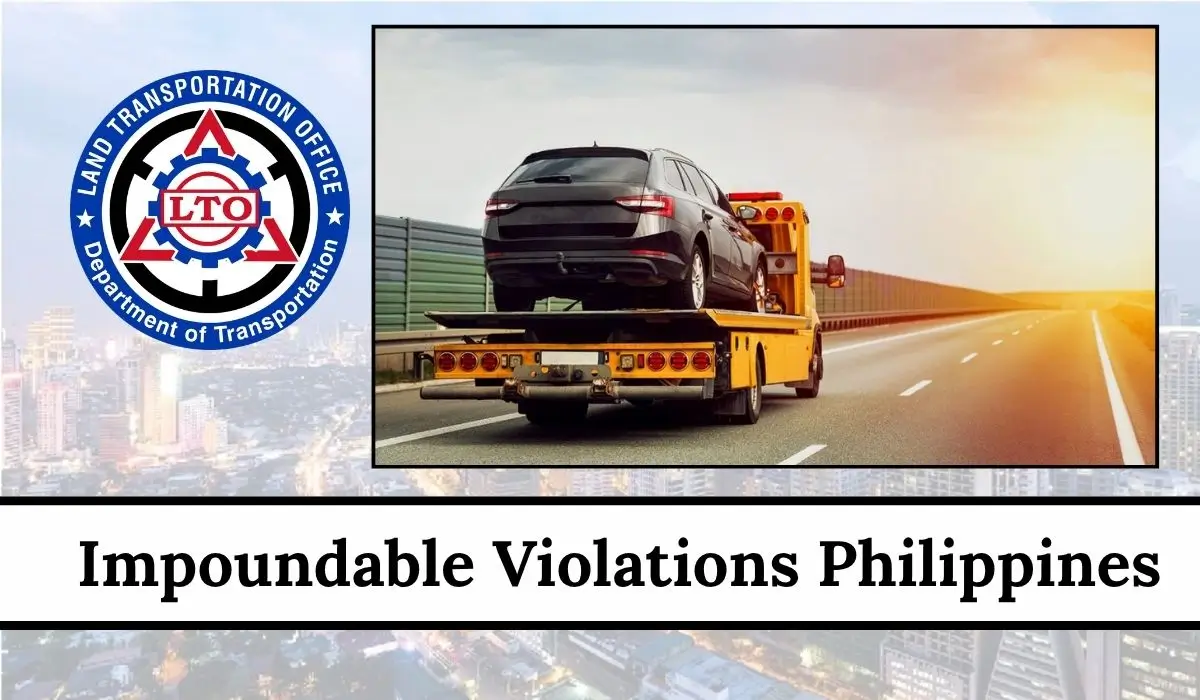
Impoundable Violations in the Philippines 2026. Road safety is a serious matter in the Philippines. Every day, thousands of vehicles move across busy streets, highways, and cities. To maintain order and reduce accidents, strict traffic laws are enforced. One of the strongest penalties used by authorities is vehicle impoundment.
If you are a driver, it is very important to understand impoundable violations. These are not simple mistakes. These are serious offenses that can lead to your vehicle being taken away by authorities.
In this detailed guide, I will explain everything in simple English so you can understand easily and avoid trouble on the road.
Impoundable Violations
The Land Transportation Office (LTO) is responsible for managing and enforcing road rules in the Philippines. It ensures that drivers, passengers, and pedestrians stay safe.
Some violations are so serious that they go beyond fines. In these cases, the vehicle is confiscated and placed under legal custody. This is called vehicle impoundment.
Impoundable violations are designed to:
- Stop dangerous driving behavior
- Protect public safety
- Enforce traffic rules strictly
When your vehicle is impounded, you cannot use it until all legal requirements are completed.

What Are Impoundable Violations?
Impoundable violations are serious traffic offenses where authorities take your vehicle and keep it in an impound lot.
This means:
- Your car or motorcycle is seized
- You lose access to your vehicle temporarily
- You must pay fines and fix issues before getting it back
These violations are not small mistakes. They are considered dangerous or illegal actions that can harm others on the road.
Purpose of Vehicle Impoundment
Vehicle impoundment is not just a punishment. It serves many important purposes:
1. Deterrence
When drivers know their vehicle can be taken away, they think twice before breaking rules.
2. Public Safety
Dangerous drivers are removed from the road immediately.
3. Regulatory Compliance
Drivers are forced to follow rules like proper registration and licensing.
4. Penalty and Discipline
It teaches drivers responsibility and encourages better behavior.
5. Road Order
It helps maintain discipline in busy traffic conditions.
Common Impoundable Violations in the Philippines
According to official guidelines, here are the most common reasons why vehicles get impounded:
1. Registration Issues
- Unregistered vehicle
- Expired registration
- Invalid registration documents
2. Fake or Tampered Documents
- Fake driver’s license
- Fake license plates
- Fake registration papers
- Tampered documents
3. Driving Without License
Driving without a valid license is a major offense.
4. Unauthorized Vehicle Modifications
- Change of color without approval
- Modified engine or chassis
- Improvised number plates
5. Improper Plate Usage
- Using plates not assigned to the vehicle
- Illegal transfer of plates
6. Defective Vehicle Parts
- Broken brakes
- No lights
- Unsafe vehicle condition
7. Public Utility Vehicle (PUV) Violations
- No body number
- Missing business name
- Violation of franchise conditions
8. Illegal Add-ons
- Unauthorized lights (strobe, colored lights)
- Curtains or tinted windshields in public vehicles
9. Driving Under the Influence (DUI)
Driving after consuming alcohol or drugs can lead to immediate impoundment.
10. Reckless Driving
Dangerous driving behavior that puts lives at risk.
11. Involvement in Accidents
Vehicles involved in serious accidents may be impounded.
12. Illegal Parking
In some cases, illegally parked vehicles are also impounded.
Additional Violations That Lead to Impoundment
Some repeated or serious violations include:
- Expired driver’s license
- Expired violation receipt
- Improper use of license
- Failure to present vehicle documents
- Breach of franchise conditions
Even small mistakes, like missing documents, can lead to big problems.
Legal Process of Vehicle Impoundment
If your vehicle is impounded, here is what usually happens:
Step 1: Apprehension
A traffic officer stops you and identifies the violation.
Step 2: Issuance of Ticket
You receive a violation ticket.
Step 3: Vehicle Seizure
Your vehicle is taken to an impound area.
Step 4: Notification
You are informed about the steps to recover your vehicle.
Step 5: Compliance
You must:
- Pay fines
- Fix violations
- Submit documents
Step 6: Release
After completing everything, your vehicle is released.
Penalties and Fines
Impoundable violations are expensive. Here’s what you may face:
- Fines from ₱1,000 to ₱10,000 or more
- Daily storage fees
- License suspension
- Additional penalties for repeat offenses
The longer your vehicle stays in the impound lot, the higher the cost.
Challenges in Implementation
Even though impoundment is important, there are some challenges:
1. Inconsistent Enforcement
Different areas may apply rules differently.
2. Limited Facilities
Some places do not have enough space for impounded vehicles.
3. Lack of Awareness
Many drivers do not know the rules.
4. Complex Procedures
Paperwork can take time.
5. Corruption Issues
Bribery can affect fair enforcement.
6. Difficult Retrieval Process
Getting your vehicle back can be stressful and confusing.
How to Avoid Impoundable Violations
Avoiding impoundment is simple if you follow basic rules:
1. Carry Your Documents
Always keep:
- Driver’s license
- Vehicle registration
2. Check Your Vehicle Regularly
Make sure everything is working properly.
3. Follow Traffic Rules
Do not overspeed or break signals.
4. Avoid Driving Under Influence
Never drive after drinking alcohol or using drugs.
5. Respect Load Limits
Do not overload your vehicle.
6. Avoid Illegal Modifications
Do not change your vehicle without approval.
7. Stay Calm with Officers
Cooperate during traffic stops.
Important Tips for Drivers
Here are some useful reminders:
- Always renew your license on time
- Keep documents updated
- Know the traffic laws
- Avoid risky driving behavior
- Maintain your vehicle properly
Being careful can save you money and stress.
Recent Updates and Improvements
Authorities are improving the system by:
- Using digital tracking systems
- Educating drivers about violations
- Coordinating with local governments
- Making rules clearer and fair
These steps help reduce confusion and improve road safety.
Why Understanding Impoundable Violations Is Important
Many drivers ignore traffic rules until they face serious consequences. But understanding these violations helps you:
- Avoid legal trouble
- Save money
- Stay safe on the road
- Protect others
Driving responsibly is not just about following rules it is about protecting lives.
FAQs
What are impoundable violations in the Philippines?
Ans: Impoundable violations are serious traffic offenses where authorities take your vehicle into custody because you broke important road rules. These violations go beyond normal fines and can result in your car or motorcycle being held until you fix the issue and pay all penalties.
Why do authorities impound vehicles?
Ans: Authorities impound vehicles to protect public safety and stop dangerous drivers from continuing risky behavior. It also helps enforce traffic laws, encourage discipline, and prevent repeat violations on the road.
What happens when your vehicle is impounded?
Ans: When your vehicle is impounded, it is taken to a designated impound area. You will receive a violation ticket, and you must follow the legal process, pay fines, and complete required documents before your vehicle is released.
How much are the fines for impoundable violations?

Ans: Fines usually start from around ₱1,000 and can go beyond ₱10,000 depending on the violation. In addition, you may also need to pay daily storage fees, which increase the total cost.
Can I get my vehicle back after impoundment?
Ans: Yes, you can recover your vehicle after completing all requirements. This includes paying fines, fixing any issues, and submitting proper documents as required by authorities.
How long does it take to release an impounded vehicle?
Ans: The release time depends on the violation and how quickly you complete the requirements. It can take a few days or even weeks if there are legal or documentation delays.
Is driving without a license an impoundable violation?
Ans: Yes, driving without a valid driver’s license is a serious offense and can lead to immediate vehicle impoundment along with fines and possible legal action.
Can expired vehicle registration cause impoundment?
Ans: Yes, if your vehicle registration is expired or invalid, authorities can impound your vehicle because it is considered non-compliant with traffic laws.
How can I avoid impoundable violations?
Ans: You can avoid these violations by always carrying valid documents, following traffic rules, keeping your vehicle in good condition, and avoiding reckless or illegal driving behavior.
Are there any recent improvements in the impoundment system?
Ans: Yes, authorities are using digital systems, improving coordination, and increasing awareness among drivers to make the process clearer, fairer, and more efficient for everyone.
Conclusion
Impoundable violations in the Philippines are serious offenses that can lead to vehicle confiscation, fines, and legal issues. These include driving without a license, fake documents, expired registration, reckless driving, and unsafe vehicles. While impoundment may feel strict, it helps improve road safety, enforce rules, and remove dangerous drivers. The process can be stressful and costly, but it can be avoided easily. By keeping documents updated, following traffic laws, and driving responsibly, motorists can stay safe, save money, and avoid unnecessary problems on the road.