Who Are Responsible If A Motorcycle Was Used In The Commission Of A Crime?

Who Are Responsible If A Motorcycle Was Used In The Commission Of A Crime? Motorcycles are a common part of daily life in the Philippines. People use them for work, travel, and delivery. However, their speed and easy movement have also made them a tool in many crimes. This has raised an important legal question: who is responsible if a motorcycle is used in the commission of a crime? To address this issue, the government enforced the Motorcycle Crime Prevention Act (RA 11235). This law clearly defines the responsibility of the motorcycle owner, driver, backrider, and any passenger who takes part in a crime.
It also introduces strict penalties, reporting duties, and identification rules to prevent misuse. This article explains what RA 11235 covers, who can be held liable, and how the law protects public safety.
What Does “Using a Motorcycle in the Commission of a Crime” Mean?
Using a motorcycle in the commission of a crime means a motorcycle is used to help commit an illegal act. This can include:
- Robbery
- Theft
- Snatching
- Shooting incidents
- Escape after committing a crime
Motorcycles are often used because they:
- Move fast
- Can enter small streets
- Are hard to chase
Because of this, the law does not only punish the criminal act. It also punishes the misuse of the motorcycle itself.
What Is the Motorcycle Crime Prevention Act (RA 11235)?
The Motorcycle Crime Prevention Act was created to stop criminals from using motorcycles as tools for crime.
This law was promulgated in July 2018 and became stricter in enforcement over time. Many people now refer to its strengthened application as part of crime prevention measures in 2026.
Main Purpose of RA 11235
The law has three main goals:
- Prevent crimes using motorcycles
- Make motorcycles easy to identify
- Hold everyone involved accountable
This law does not only focus on the rider. It also looks at owners, passengers, and even negligence.
What Law Is Covered by RA 11235?
RA 11235 is focused on criminal accountability when motorcycles are used in crimes. It works together with:
- The Revised Penal Code
- Traffic and registration laws
- LTO and PNP enforcement rules
The law clearly states that ownership does not remove responsibility if rules are ignored.

Why Was This Law Made?
Before this law, many crimes were hard to solve because:
- Motorcycles had small plates
- Riders wore helmets with no identification
- Owners did not report stolen bikes
Criminals abused these gaps. RA 11235 closed these loopholes.
How Does the Motorcycle Crime Prevention Act Help?
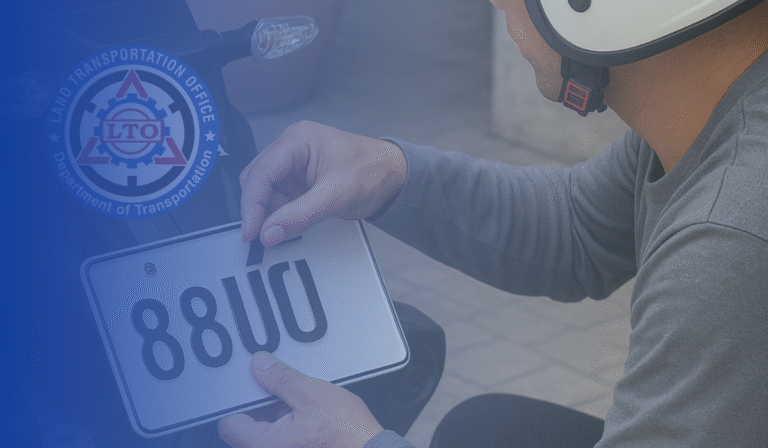
1. Bigger and Clearer License Plates
Motorcycles must have:
- Larger number plates
- Readable from a distance
- Color-coded plates
This helps witnesses and cameras identify motorcycles used in crimes.
2. Joint Operations and Control Center
The law created a joint center between:
- Land Transportation Office (LTO)
- Philippine National Police (PNP)
This ensures:
- Better coordination
- Faster tracking
- Stronger enforcement
3. Strong Deterrence
The penalties are severe. This sends a clear message:
Using a motorcycle in a crime is not a small offense.
Who Are Responsible If a Motorcycle Is Used in a Crime?
RA 11235 clearly names four responsible parties:
- The motorcycle owner
- The driver
- The backrider
- Any passenger who participated
Responsibility depends on participation, knowledge, and negligence.
Responsibility and Liability Explained Simply
1. The Owner of the Motorcycle
The owner is not always innocent by default. The law looks at what the owner did or failed to do.
When Is the Owner Liable?
The owner can be held responsible if:
- They participated in the crime
- They allowed the motorcycle to be used
- They failed to report it as stolen
- They were negligent
Even if the owner did not ride the motorcycle, liability can still exist.
Owner’s Criminal Liability Under RA 11235
If the Motorcycle Was Used in a Grave Felony
If the motorcycle is used in a serious crime such as:
- Armed robbery
- Homicide
- Kidnapping
And the owner participated, the penalty can be:
- Reclusion temporal to reclusion perpetua
- This means 12 years up to 40 years
This applies whether the crime was attempted or completed.
If the Crime Is Less Serious
For less grave or light offenses:
- The penalty ranges from prision correccional to prision mayor
- This means 6 months up to 12 years
Unregistered Motorcycle Liability
If the motorcycle is not registered and used in a crime:
- The maximum penalty applies
- Registration violations increase liability
Failure to Register or Report Sale
Owners must:
- Register a motorcycle within five days of purchase
- Report sale or transfer immediately
Failure can result in:
- Jail time
- Fine between ₱20,000 to ₱50,000
- Or both
Failure to Report Lost or Stolen Plates
If a plate is:
- Lost
- Damaged
- Stolen
The owner must report it immediately to LTO and PNP. Failure to report within three days, if the plate is used in a crime, leads to:
- Arresto mayor to prision correccional
- Additional fines
What If the Owner Did Not Know?
This is a common question. If the owner did not participate, then:
- Criminal penalties for the crime may not apply
- BUT administrative penalties can still apply
The motorcycle can also be:
- Impounded
- Forfeited to the government
Unless proven that the owner is an innocent third party.
2. The Driver of the Motorcycle
The driver has direct responsibility. If the driver knowingly used the motorcycle to commit a crime, liability is automatic.
Driver’s Liability Based on Crime Severity
Grave Felony
Penalty:
- Reclusion temporal to reclusion perpetua
This applies even if the crime was not completed.
Less Grave or Light Crime
Penalty:
- Prision correccional to prision mayor
If Death or Serious Injury Occurred
Penalty:
- Life imprisonment
Driving Without a Proper Plate
If the driver uses a motorcycle with:
- No plate
- Unreadable plate
Penalty:
- Fine from ₱50,000 to ₱100,000
- Motorcycle seizure
3. Backrider or Passenger Liability
A backrider is not automatically guilty. But if the backrider knew and participated, liability applies.
Backrider Penalties
Grave Felony
- Reclusion temporal to reclusion perpetua
Less Grave or Light Crime
- Prision correccional to prision mayor
If Death or Serious Injury Occurred
- Life imprisonment
Fines, Penalties, and Seizure Rules
Sections 9 and 10 of RA 11235
These sections clearly state:
Everyone involved is accountable.
Summary of Penalties
- Minor crimes: 4 months to 2 years
- Serious crimes: 6 to 12 years
- Crimes causing death: Life imprisonment
- Intentional use of motorcycle: 12 to 20 years
Impoundment of Motorcycle
- Motorcycle is seized by PNP
- Stored in LGU impounding centers
- Held as evidence
Forfeiture
After the case:
- Motorcycle is forfeited to the government
- Unless the owner is proven innocent
Why This Law Matters to Ordinary People
This law is not only for criminals.
It is also for:
- Motorcycle owners
- Families
- Daily riders
One careless act can lead to serious legal trouble.
How to Stay Safe Under RA 11235
- Always register your motorcycle
- Report theft immediately
- Do not lend your motorcycle carelessly
- Keep plates visible and intact
Awareness is protection.
FAQs
Who is responsible if a motorcycle is used in a crime in the Philippines?
Ans: Under the Motorcycle Crime Prevention Act (RA 11235), responsibility can fall on the motorcycle owner, the driver, the backrider, or any passenger who knowingly participated in the crime. Liability depends on participation, knowledge, and negligence.
Can a motorcycle owner be jailed even if they were not riding the motorcycle?
Ans: Yes, in some cases. If the owner failed to report the motorcycle as stolen, did not register it properly, or was negligent, they can face penalties. However, criminal liability mainly applies if the owner participated in the crime.
What happens if the motorcycle owner did not know the motorcycle was used in a crime?
Ans: If the owner did not know and did not participate, they may not be criminally liable for the crime itself. However, they can still face penalties for failure to register, report theft, or report missing number plates. The motorcycle can also be impounded.
Are backriders also punished under RA 11235?
Ans: Yes. A backrider or passenger who knowingly participated in the crime is punished the same way as the driver. The penalty depends on how serious the crime was and the role they played.
What are the penalties if a motorcycle is used in a serious crime?
Ans: If a motorcycle is used in a serious crime, penalties can range from 6 years to life imprisonment. If the crime results in death or serious injury, life imprisonment may be imposed.
What happens to a motorcycle used in the commission of a crime?
Ans: The motorcycle will be seized by the Philippine National Police and kept in an impounding center. After the case ends, it may be forfeited to the government unless the court proves the owner is innocent.
Is it illegal to ride a motorcycle without a proper number plate?
Ans: Yes. Riding a motorcycle without a readable number plate is illegal. The penalty includes a fine ranging from ₱50,000 to ₱100,000 and seizure of the motorcycle.
Why does the law require bigger and readable motorcycle plates?
Ans: The law requires bigger and clearer plates to help authorities easily identify motorcycles used in crimes. This makes tracking and solving crimes faster and more effective.
Conclusion
The Motorcycle Crime Prevention Act under RA 11235 is a strong law designed to protect public safety in the Philippines. It makes sure that motorcycles are not abused for criminal purposes and that everyone involved is held accountable. The law clearly defines the responsibility of the owner, driver, backrider, and any passenger who participates in a crime. Even negligence can lead to penalties. Understanding this law is not optional for motorcycle owners. It is a responsibility. Knowing your duties, following registration rules, and reporting issues on time can protect you from serious legal consequences while helping reduce crime in society.