RA 11229 – Child Safety In Motor Vehicles Act
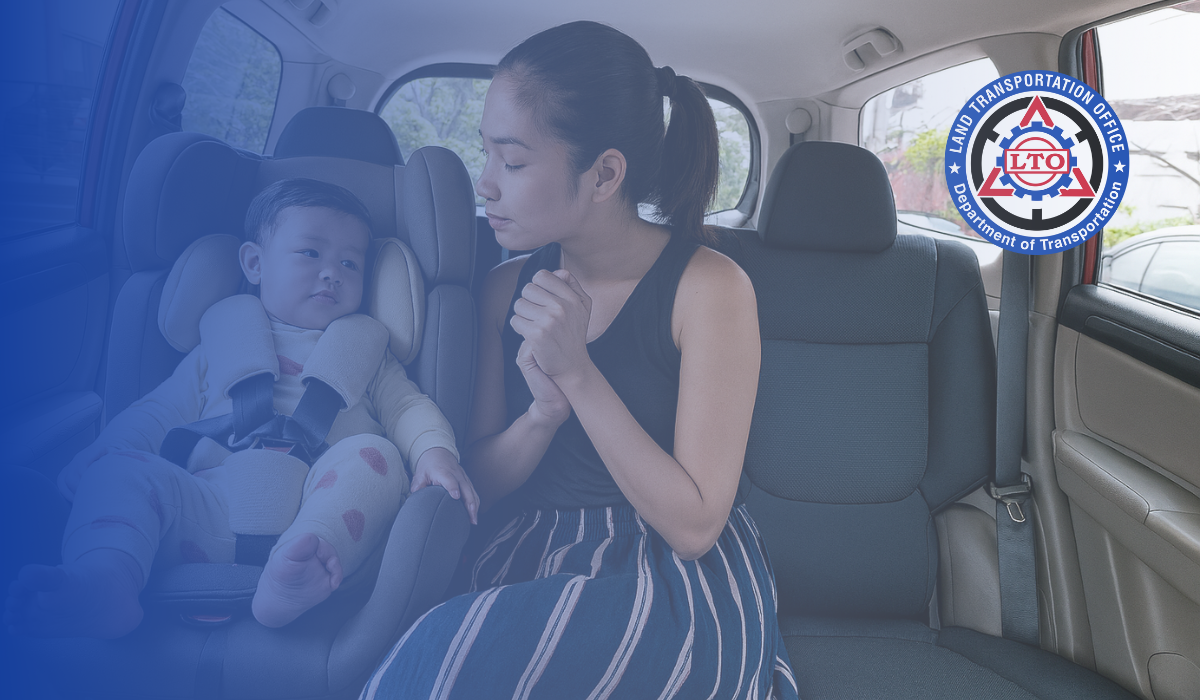
RA 11229 – Child Safety In Motor Vehicles Act. Throughout the last two decades, the Land Transportation Office (LTO) and other deputized agencies have offered fines and penalties to motorists who violate its rules and regulations. Road accidents and crashes are one of the most serious incidents of violation, resulting in over 5960 deaths per year or 662 per year from 2006 to 2014. Therefore, the government decided that it was necessary to protect children, which led to the creation and enactment of Republic Act (RA) 112229, also known as the Child Safety in Motor Vehicles Act.
Like all other laws, the Child Safety in Motor Vehicles Act (RA 11229) is a federal statute. Senator JV Ejercito authored this bill in order to ensure the safety of children while riding covered motor vehicles. As a result of this law, the use of child restraint systems (CRS) can play an important role in preventing accidents and promoting the safety of the public in regards to land transportation, particularly for children. Those measures are intended to reduce the risk of accidents, injuries, and death, particularly those resulting from motor vehicle accidents. This law has been adopted to prevent the death of children on the road. Let us examine what it is all about and how it may be able to help.
What is RA 12299 – Child Safety in Motor Vehicles Act
Republic Act No. 11229 has the official title An Act to Provide Special Protection for Child Passengers in Motor Vehicles and Appropriate Funds Therefor. This law is commonly known as the Child Safety in Motor Vehicles Act and was enacted separately from RA 10666, the Children Safety on Motorcycles Act. By requiring the use of safe, appropriate, quality and affordable child restraint systems in motor vehicles, this law was designed to ensure the safety of children while aboard or being transported in any form of motor vehicle.
Furthermore, the law mandates that the agency must maintain an adequate, consistent and objective standard for requiring, regulating, promoting, and informing the public about child restraint systems in motor vehicles, as well as providing easy access to child restraint systems that meet the international standards of the United Nations as well as are safe, appropriate, high-quality, and affordable.
The Department of Transportation (DOTr), in consultation with the Department of Trade and Industry (DTI), Department of Health (DOH), Department of Interior and Local Government (DILG), Philippine National Police-Highway Patrol Group (PNP-HPG), Metro Manila Development Authority (MMDA), Council for the Welfare of Children (CWC), and other concerned agencies and stakeholders, have developed the Implementing Rules and Regulations of RA 12299 which include the following:
- A motor vehicle covered by this Act;
- Standards and types of child restraint systems based on UN Regulations 44 and 129;
- The compatibility of child restraint systems with currently available motor vehicles;
- The child restraint system must be installed and positioned correctly in the vehicle;
- Providing certification training to law enforcement, product inspectors, employees and agents of manufacturers, distributors, sellers and importers;
- Manufacturers, importers, and distributors of child restraint systems are subject to regulation;
- Those responsible for monitoring, evaluating and reporting on the implementation and compliance with the provisions of this Act;
- The appropriation of fines and fees collected in the course of implementing this law
Provisions of the Child Safety in Motor Vehicles Act (RA 12299)
A number of provisions are included in the Child Safety in Motor Vehicles Act, including the following:
Mandatory Use of Child Restraint Systems in Motor Vehicles
According to Republic Act 12299, children who are twelve (12) years old or younger must be restrained while aboard a closed motor vehicle when the engine is running, unless the child is at least one hundred fifty (150) centimeters, or fifty-nine (59) inches tall. A child should never be left alone in a motor vehicle without an adult accompanying him or her.
Children are in the rear seats.
When a child is twelve (12) years or younger, he or she may not be seated in a motor vehicle whose engine is running or while being transported on any road, street or highway unless he or she meets the minimum height requirement of one hundred fifty (150) centimeters or fifty-nine (59) inches.
Safety Standards for Child Restraint Systems
The Department of Trade and Industry (DTI) must set forth standards for approving or disapproving child restraint systems before they can be manufactured, sold, distributed, or used legally. These standards must conform to United Nations Regulation 44 and 129 and other acceptable international standards when approving or disapproving child restraint systems. When these standards have been met, the product is issued a Bureau of Product Standards (BPS) sticker, a Philippine Standards (PS) mark license, or an Import Clearance Certificate (ICC) license certificate. In addition, the BPS publishes a list of child restraint systems manufacturers, importers and distributors as well as the brands which meet its standards periodically in newspapers of general circulation.
Prohibition on Substandard or Expired Child Restraint System
According to the law, any person, company, partnership, sole proprietorship, manufacturer, distributor, and/or importer may not manufacture, use, import, sell, distribute, donate, lease, advertise, promote, or otherwise market the use of expired or substandard child restraints.
Certified Training Program
A certification program is also provided under the law for product inspectors, law enforcers, manufacturers, distributors, and sellers about regulation, installation, use, maintenance, and inspection of child restraint systems by the Department of Transportation (DOTr) and the Department of Transportation (DTI).
Child Safety in Public Utility Vehicles
As of yet, the Department of Transportation has not recommended the use of child restraint systems for public utility vehicles, such as jeepneys, buses, including school buses, taxis, vans, coasters, accredited/affiliated service vehicles of transportation network companies, as well as all other motor vehicles used for public transportation.
RA 11229 – Child Safety In Motor Vehicles Act – Video Guide
Penalties for Violation of RA 12299
Moreover, the law provides information on the penalties for violations of any of the provisions contained in the Child Safety in Motor Vehicles Act (RA 12299).
Below is a list of these penalties:
- For violations related to the mandatory use of child restraint systems and the presence of children in the rear seats of covered motor vehicles:
- First offense: One thousand pesos (₱1,000.00) fine
- Second offense: Two thousand pesos (₱2,000.00) fine
- Third and succeeding offenses: Five thousand pesos (₱5,000.00) in fine and one (1) year suspension of license
- In the event that manufacturers, distributors, importers, retailers, or sellers violate the standards for child restraint systems and the prohibition on substandard or expired child restraint systems, they may be subject to the following penalties:
- There will be a fine of not less than fifty thousand pesos (₱50000.00) but no more than one hundred thousand pesos (₱100,000.00) for each child restraint system product manufactured, distributed, imported and/or sold, in addition to any other penalties imposed pursuant to Republic Act No. 7394 or the “Consumer Act of the Philippines”.
- The following violations may occur when a driver permits the use of a substandard or expired child restraint system or permits the use of a child restraint system which does not bear the PS mark or the ICC sticker and certificate:
- First offense: A thousand peso fine (₱1,000.00)
- Second offense: Three thousand pesos (₱3000.00) fine
- Third and succeeding offenses: A fine of five thousand pesos (₱5,000.00) and a one-year suspension of your driver’s license
- The following penalties will be imposed for violations that involve tampering, altering, forging, or imitating the PS mark or the ICC stickers on child restraint systems:
- There shall be a fine of not less than 50,000 pesos but not more than one hundred thousand pesos per child restraint system product, without prejudice to other penalties imposed by Republic Act No. 7394 or “Consumer Act of the Philippines” for any product that is not approved of the DOTr. This act provides that, once every five (5) years, the DOTr may increase or adjust the amount of fines prescribed in this section up to a maximum of 10% (10%) of the existing rate for the purpose of increasing or adjusting the amounts of the fines.
Exemption to the Provisions of RA 12299
As stated in the Child Safety in Motor Vehicles Act (RA 12299), the following conditions constitute exemptions from the requirement to use child restraint systems:
- Child restraint systems pose a greater danger to children in the following situations:
- In case of medical emergency;
- Whenever a child is transported with a medical or developmental condition;
- The child suffers from a medical, mental, or psychological condition; or
- There are other analogous circumstances that are prescribed under the implementing rules and regulations (IRR).
RA 11229 – Child Safety in Motor Vehicles Act PDF
Key Highlights of the Child Safety in Motor Vehicles Act
Here’s a summarized table to show the core provisions of RA 11229 for easy reference:
| Provision | Details |
|---|---|
| Age & Height Coverage | Children 12 years old and below, shorter than 150 cm (4’11”) |
| Mandatory CRS | Appropriate child restraint system required in private vehicles |
| Rear Seats Only | Children must sit in the back unless meeting height requirement & properly belted |
| Standards Used | Based on UN Regulations 44 & 129, enforced by DTI & BPS |
| Certification Required | PS or ICC license mandatory for CRS manufacturers, importers & sellers |
| Ban on Substandard CRS | Illegal to use, sell, donate or market expired or substandard CRS |
| Penalties | Fines up to ₱5,000 & driver’s license suspension for repeat violations |
| Training Programs | For law enforcers, manufacturers & sellers on CRS installation & compliance |
| Public Awareness | Nationwide campaigns to educate parents & drivers |
Why Was RA 11229 Created?
The Philippines recognized the urgent need to protect children from traffic-related injuries and fatalities. According to the World Health Organization (WHO), road accidents are among the leading causes of death for children worldwide.
RA 11229 serves multiple purposes:
- Minimize injuries and fatalities: By ensuring that children use a properly installed child restraint system, the chances of injury in crashes are significantly reduced.
- Promote road safety culture: Encourages responsible driving habits and safety-first mindsets among motorists.
- Align with international norms: The law integrates globally accepted safety standards, helping the country keep pace with worldwide road safety initiatives.
Compliance: What Drivers Should Know
- Always ensure your child’s CRS is appropriate for their age, height, and weight.
- Look for the PS mark or ICC certification when purchasing a child car seat in the Philippines.
- Never allow children under 12 years old or shorter than 150 cm to sit in the front seat unless permitted by law.
- Remember that your responsibility does not end with seat belts; children must always be supervised and never left alone in a car.
FAQs about RA 11229 – Child Safety in Motor Vehicles Act
What is RA 11229 or the Child Safety in Motor Vehicles Act?
Ans: RA 11229, officially titled the Child Safety in Motor Vehicles Act, is a Philippine law that mandates the use of certified child restraint systems (CRS) to protect children 12 years old and below, or shorter than 150 cm, when traveling in motor vehicles.
Who needs to use a child restraint system under RA 11229?
Ans: Drivers of private vehicles must secure children aged 12 years and below, or those under 150 cm in height, using an appropriate child restraint system. Public utility vehicles are currently not required but may have future guidelines.
What are the penalties for violating RA 11229?
Ans: Penalties range from fines of ₱1,000 for a first offense to ₱5,000 and license suspension for repeat offenses. Manufacturers and sellers of substandard or expired CRS can be fined ₱50,000 to ₱100,000 per violation.
Are there exemptions to using a child restraint system?
Ans: Yes. Exemptions include medical emergencies, when the child has a medical or developmental condition that makes CRS use unsafe, or other similar circumstances defined by implementing rules.
How can I ensure a child car seat is compliant with Philippine law?
Ans: Look for a CRS with a Philippine Standards (PS) mark or an Import Clearance Certificate (ICC) sticker, proving it meets UN Regulation 44 or 129 standards. Avoid expired or uncertified seats to comply with RA 11229.
Conclusion
The Child Safety in Motor Vehicles Act (RA 11229) stands as a critical safeguard for Filipino children, reducing the risk of road tragedies. By mandating child restraint systems and aligning with global standards, it nurtures a stronger culture of road safety. Every driver shares in this responsibility—choosing certified CRS, following seat placement rules, and never leaving children unattended can collectively save countless young lives on Philippine roads.