When May You Lend Your Driver’s License? Complete Guide To Law, Risks And Penalties
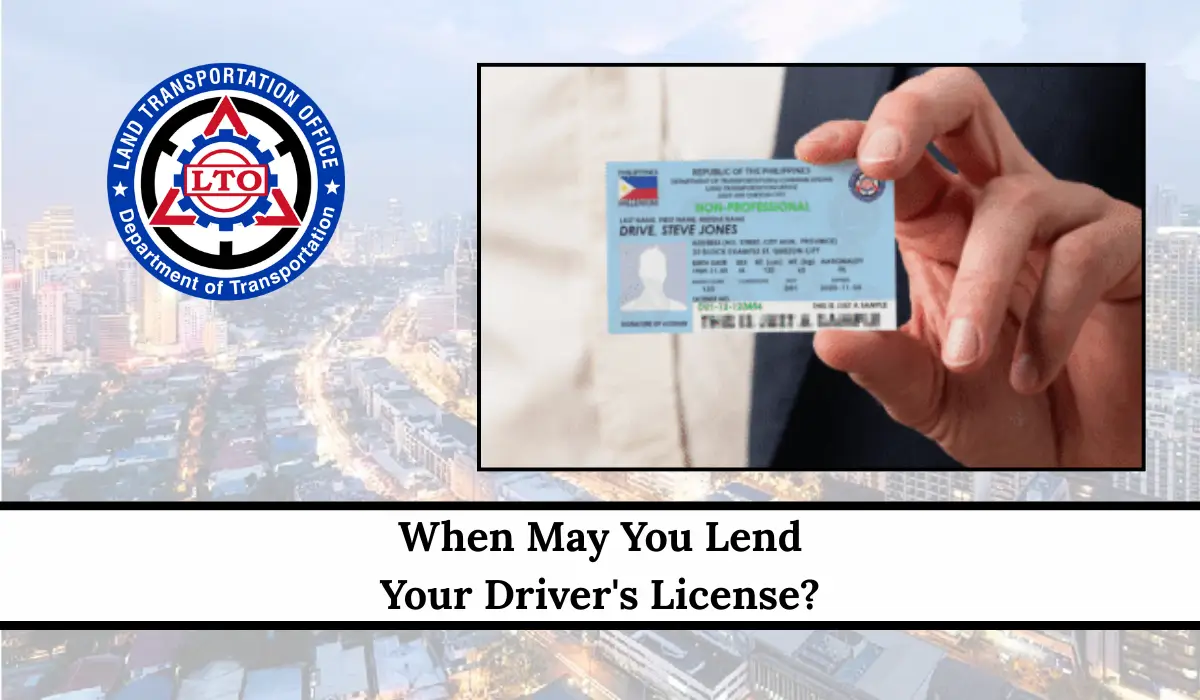
When May You Lend Your Driver’s License? Many people think lending a driver’s license is a small favor, especially for a friend or during an emergency. But the truth is simple and serious. A driver’s license is a personal, government-issued legal document provided by the Land Transportation Office. It confirms your identity and proves you are qualified to drive. Under Republic Act No. 4136 and related amendments, lending, transferring, or allowing someone else to use your license is strictly illegal. There are no exceptions. Not for convenience, practice, or emergencies. Doing so can lead to fines, suspension, revocation, or even criminal liability.
If the borrower commits traffic violations, causes accidents, or engages in fraud, you may be held responsible. Your personal information can also be misused, leading to identity theft. In LTO exams, the correct answer is clear: under no circumstances may you lend your driver’s license.
What Is a Driver’s License and Why It Matters
A driver’s license is not just a plastic card. It is a government-issued legal document. In the Philippines, it is issued by the Land Transportation Office. This document confirms two important things:
- Your identity
- Your legal authority to drive specific vehicles
When the government gives you a driver’s license, it means:
- You passed written exams
- You passed practical driving tests
- You understand traffic laws
- You are qualified to drive safely
This is why a driver’s license is personal. It belongs only to the person whose name and photo appear on it. It is not something you can share like a pen or a jacket.
The Clear Legal Answer: Never
The short and correct answer to the question is:
- Never.
You may not lend your driver’s license at any time. There are no exceptions.
- Not for practice driving.
- Not for emergencies.
- Not for convenience.
- Not for a friend.
The law does not allow it.
What Does the Law Say About Lending a Driver’s License?
The main law that governs driver’s licenses in the Philippines is Republic Act No. 4136, also known as the Land Transportation and Traffic Code. Section 24 clearly states that:
- A driver’s license is valid only for the person to whom it is issued.
- It cannot be transferred.
- It cannot be lent.
- It cannot be used by another person.
This law was strengthened by Batas Pambansa Blg. 398, which further emphasized that only properly licensed individuals may operate motor vehicles. The purpose of this law is simple:
- To protect road safety
- To prevent identity misuse
- To stop unauthorized driving
- To ensure accountability
So if someone asks you, “When may you lend your driver’s license?”
The legally correct answer is:
- Under no circumstances.
Why Lending Your Driver’s License Is So Dangerous
Now let’s talk about the real risks. Some people think the problem is small. But the danger is big. When you lend your driver’s license, you allow another person to use your identity.That means if they commit a mistake, the law may see you as responsible. Let’s break this down clearly.
Major Legal Risks You Can Face
1. Heavy Fines
If authorities discover that your license was used improperly, you may be fined.
For example, driving with a fake or improperly used license may lead to a fine of P3,000 on the first offense. This is not a small amount.
2. License Suspension
Your license can be suspended. This means you cannot drive legally for a period of time.
Imagine:
- You need to drive to work.
- You need to take your child to school.
- You need to run daily errands.
But you cannot drive because your license is suspended. That is serious.
3. License Revocation
Revocation is worse than suspension. Revocation means your license is canceled. You may have to:
- Apply again
- Take exams again
- Pay new fees
You lose everything you worked hard for.
4. Criminal Responsibility
If the person who borrowed your license commits a crime, you can be involved.
For example:
- Hit and run
- Serious accident
- Reckless driving
Your name may appear in police records. Even if you were not driving, you may need to prove your innocence. ,That can mean:
- Police investigation
- Court appearances
- Lawyer fees
- Stress
Risk of Traffic Violations on Your Record
Every traffic violation is recorded. If someone:
- Runs a red light
- Speeds
- Parks illegally
- Causes an accident
And they use your license, the violation may appear under your name. This can cause:
- Higher penalties later
- Points on your record
- Difficulty renewing your license
Your clean record can be destroyed in one day.
Identity Theft and Fraud Risks
Your driver’s license contains important personal information:
- Full name
- Date of birth
- Address
- License number
If someone misuses this information, they can commit fraud. For example:
- Open fake accounts
- Apply for loans
- Rent vehicles
- Register services
Fixing identity theft is very stressful and time-consuming. Sometimes it takes years to clear your name.
Practical Problems You May Face
Even if no crime happens, you still face problems.
If Your License Is Lost
If the borrower loses your license, you must:
- Report it
- Apply for replacement
- Pay fees
- Stand in long lines
That costs time and money.
If Your License Is Damaged
If it gets damaged, you must replace it. Again, more hassle for you.
Common Violations That Can Happen
Let us look at common situations where things go wrong.
Driving Under False Identity
- If the borrower is stopped by police, they show your license.
- They are pretending to be you.
- That is identity misrepresentation.
- If they are involved in an accident, the police report may carry your name.
- That can lead to serious investigation.
Fraudulent Activities
- A driver’s license is a powerful ID.
- It can be used in many transactions.
- If misused, you can be linked to activities you never did.
Driving With a Fake License Accusation
If authorities suspect improper use, both you and the borrower may be penalized. Anyone caught may face:
- A P3,000 fine for first offense
- Disqualification from being granted a driver’s license for one year
That is a heavy punishment.
What If It Is an Emergency?
Many people ask this.
- “What if it is an emergency?”
The answer is still no.
The law does not create exceptions for emergencies. If someone needs to drive, they must:
- Have their own valid license
- Be legally authorized
Helping someone by breaking the law is not real help. It only creates bigger problems.
What Should You Do If Someone Asks to Borrow Your Driver’s License?
Now let’s focus on the correct action. Follow these steps carefully.
Step 1: Stay Calm
- Do not panic.
- Do not argue.
Step 2: Politely Refuse
Say something simple:
- “I’m sorry, I cannot lend my driver’s license. It is illegal.”
Step 3: Explain the Risk
You can explain:
- It can cause fines.
- It can suspend your license.
- It can create legal problems for both of you.
Step 4: Suggest Legal Alternatives
You may suggest:
- Applying for their own license
- Using public transportation
- Hiring a licensed driver
- Calling a ride service
This way, you help them without risking yourself.
Why the Government Is Strict
Driving is a serious responsibility. A vehicle can:
- Cause injury
- Damage property
- Take lives
The government wants only qualified people behind the wheel. The Land Transportation Office enforces strict rules to:
- Protect road users
- Reduce accidents
- Prevent fraud
- Ensure accountability
Strict rules save lives.
LTO Exam Perspective
In LTO exams, this question often appears:
- When may you lend your driver’s license?
The correct answer is:
- Under no circumstances.
If you choose any other answer, it is wrong. Remember this clearly.
Borrower’s Responsibility
Anyone who drives must:
- Possess their own valid driver’s license
- Be authorized for the vehicle type
- Follow traffic laws
Driving without a valid license is illegal. Using someone else’s license makes it worse. Both parties can face punishment.
Real Life Example
Let’s imagine this scenario. Your friend says:
- “I forgot my license. Let me use yours just for today.”
You trust him. Later, he causes a minor accident.
- Police come.
He presents your license.
- The accident report shows your name.
Now you must:
- Explain everything
- Prove you were not driving
- Face possible penalties
All because you tried to help.
Is it worth risking your legal standing?
- No.
Final Reminder: Protect Your License Like Your Identity
Your driver’s license is:
- Your legal identity on the road
- Your proof of qualification
- Your responsibility
Protect it like you protect:
- Your passport
- Your national ID
- Your bank card
- Never lend it.
- Never share it.
- Never risk it.
FAQs
When may you lend your driver’s license?
Ans: You may never lend your driver’s license. There are no exceptions at all. It does not matter if it is for a short trip, an emergency, or to help a friend. The law clearly states that a driver’s license is personal and non transferable. The correct and final answer is under no circumstances.
Is it really illegal to lend my driver’s license?
Ans: Yes, it is completely illegal. Under Republic Act No. 4136, a driver’s license is valid only for the person to whom it was issued. It cannot be transferred or lent to someone else. The Land Transportation Office strictly enforces this rule to ensure that only qualified drivers operate motor vehicles and to prevent fraud or misuse of identity.
What can happen if I lend my driver’s license to someone?
Ans: If you lend your driver’s license, you can face serious consequences. You may be fined, your license may be suspended, or it could even be revoked. If the borrower commits traffic violations or causes an accident, those violations may appear under your name. You might also be involved in legal investigations. In short, the risks are legal, financial, and personal.
Can I lend my license during an emergency?
Ans: No, you cannot lend your license even during an emergency. The law does not provide any exception for urgent situations. Every person who drives must have their own valid driver’s license. Helping someone by breaking the law can create bigger problems for both of you.
What if the borrower is a family member?
Ans: Even if the person asking is your brother, sister, parent, or close friend, you still cannot lend your license. The law applies equally to everyone. A driver’s license is a personal legal document, and it must only be used by the person whose name and photo appear on it.
What if someone only needs my license for identification?
Ans: You should not lend your license even for identification purposes. Your driver’s license contains sensitive personal details such as your full name, address, date of birth, and license number. Sharing it increases the risk of identity theft or fraudulent activities. It is always safer to keep it with you.
What happens if someone commits a traffic violation using my license?
Ans: If someone uses your license and commits a traffic violation, the record may be placed under your name. This can result in fines, penalty points, and problems when renewing your license. In serious cases, you may have to prove that you were not the one driving. That process can be stressful and time consuming.
What is the penalty for improper use of a driver’s license?
Ans: Improper use of a driver’s license may result in a fine of P3,000 for the first offense. In addition, a person may be disqualified from being granted a driver’s license for one year. Penalties can become more serious if the violation is repeated. This shows how strict the authorities are about protecting the integrity of driver’s licenses.
Conclusion
A driver’s license is a personal legal document issued by the Land Transportation Office that proves your identity and authority to drive. Under Republic Act No. 4136, it cannot be transferred or lent to anyone. There are no exceptions, even in emergencies. Lending it can lead to fines, suspension, revocation, legal trouble, traffic violations under your name, and identity theft. Every driver must have their own valid license. The correct answer is clear: you must never lend your driver’s license under any circumstances.