What Will Happen if the Driver Refuses to Undergo Mandatory Testing, If Such Driver is Suspected of Driving Under the Influence of Liquor?

What Will Happen if the Driver Refuses to Undergo Mandatory Testing. Driving under the influence of alcohol is one of the main reasons for serious road accidents around the world. When a driver drinks alcohol and then drives a vehicle, their ability to focus, judge distance, and react quickly becomes weak. Because of this danger, many countries have strict laws to control drunk driving.
In the Philippines, the government introduced strong rules to prevent alcohol related accidents. One of the most important laws is Republic Act No. 10586, also known as the Anti Drunk and Drugged Driving Act of 2013. This law allows traffic officers to conduct mandatory alcohol testing if they suspect a driver of being under the influence of alcohol or drugs. However, many drivers ask an important question:
- What will happen if a driver refuses to undergo mandatory alcohol testing?
Refusing these tests has serious legal consequences. The law clearly states that drivers must cooperate with authorities during such situations. Refusal can lead to license confiscation, license revocation, vehicle impoundment, and additional legal penalties. This article explains everything in simple language so that drivers clearly understand their responsibilities and the risks of refusing mandatory alcohol testing.
Mandatory Alcohol Testing
Mandatory alcohol testing is a process where a driver must take specific tests to determine whether alcohol is present in their body. These tests are usually conducted when a driver shows signs of intoxication or when they are involved in a traffic accident.
The purpose of mandatory testing is simple. It helps authorities identify drivers who are not safe to operate a vehicle. It also helps prevent accidents and protect people on the road.
When traffic officers suspect that a driver has consumed alcohol, they may require the driver to undergo testing. This process is supported by law and drivers are expected to cooperate. Mandatory testing is an important part of road safety programs. Without it, it would be difficult for authorities to confirm whether a driver is intoxicated.

Why Mandatory Testing Is Important for Road Safety
Road accidents can destroy lives in seconds. Families lose loved ones and communities suffer when accidents happen. A large number of these accidents are caused by drunk driving.
Alcohol affects the brain and slows down reaction time. A driver under the influence may not be able to judge distance properly. They may fail to notice traffic signals or pedestrians.
Mandatory alcohol testing helps reduce these risks.
It allows authorities to identify unsafe drivers before a serious accident happens. It also discourages people from drinking and driving because they know they can be tested at any time. When drivers understand that refusing the test can lead to serious penalties, they are more likely to follow the law.
The Law Behind Mandatory Alcohol Testing in the Philippines
The Philippines implemented strict laws to reduce drunk driving incidents. One of the most important laws is Republic Act No. 10586, also called the Anti Drunk and Drugged Driving Act of 2013.
This law was introduced to protect people and reduce the number of road accidents caused by intoxicated drivers.
The law allows traffic enforcers to perform alcohol and drug testing when necessary. It also explains the penalties for drivers who refuse testing. The law works together with several government agencies such as:
- Land Transportation Office (LTO)
- Philippine National Police (PNP)
- Metropolitan Manila Development Authority (MMDA)
- Local Government Units (LGUs)
These authorities are responsible for enforcing the law and ensuring that drivers follow road safety rules.
Situations When Drivers Must Undergo Mandatory Testing
Drivers are not tested randomly without reason. Traffic officers must have valid grounds to suspect that the driver is intoxicated. Mandatory testing is usually required in the following situations.
1. When a Driver Shows Signs of Intoxication
Traffic officers may require testing if the driver shows clear signs of drinking alcohol. Common signs include:
- Smell of alcohol from the driver
- Slurred speech
- Poor coordination
- Unsteady walking
- Red or watery eyes
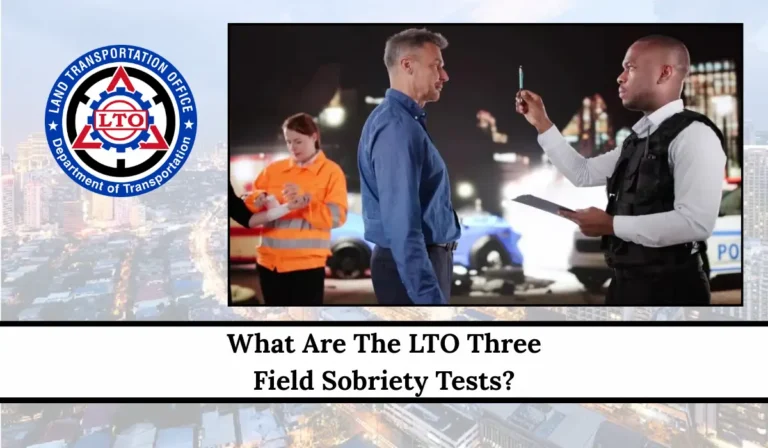
If these signs are present, the officer may ask the driver to perform sobriety tests.
2. Erratic Driving Behavior
If a driver is driving in a dangerous or unusual way, authorities may suspect intoxication. Examples include:
- Swerving between lanes
- Sudden braking
- Driving too slowly or too fast
- Ignoring traffic signals
Such behavior may indicate that the driver is not in full control of the vehicle.
3. Involvement in Road Accidents
Mandatory testing is also required when a driver is involved in an accident that causes:
- Physical injuries
- Property damage
- Loss of human life
In these situations, authorities must confirm whether alcohol or drugs were involved.
Types of Mandatory Alcohol Testing
Under the law, two main types of alcohol testing can be used to determine whether a driver is intoxicated. These tests help measure the level of alcohol in a driver’s body.
1. Alcohol Breath Analyzer Testing
Alcohol Breath Analyzer testing is commonly used by traffic authorities. It is a quick and simple method to measure alcohol levels through a person’s breath.
This test estimates the Blood Alcohol Concentration (BAC). BAC shows how much alcohol is present in the bloodstream. A higher BAC level means the driver has consumed more alcohol.
How Alcohol Breath Analyzer Testing Works
The process usually follows several simple steps.
Step 1: Breath Sample Collection
- The driver is asked to blow into the mouthpiece of a breath analyzer device.
- The device collects a sample of the driver’s breath.
Step 2: Analysis of the Breath Sample
- The device analyzes the breath to detect alcohol content.
- Special sensors inside the device measure the amount of alcohol.
Step 3: Display of BAC Level
- The device then displays the BAC result on the screen.
- This result helps officers determine whether the driver is legally intoxicated.
Accuracy of Breath Analyzer Testing
Modern breath analyzer devices are generally accurate when used properly. However, accuracy may be affected by factors such as:
- Device maintenance
- Calibration of the equipment
- Environmental conditions
- Breathing technique of the driver
Proper training and correct procedures help ensure reliable results.
2. Gas Chromatography Mass Spectroscopy Testing
Gas Chromatography Mass Spectroscopy, often called GC MS, is a more advanced method used for alcohol and drug testing.
- This test is commonly used in laboratories and forensic investigations.
- GC MS is highly accurate and can detect very small amounts of substances.
Because of its complex process, this test is usually used when breath analyzer testing is not possible or when authorities need confirmation of earlier test results.
When GC MS Testing Is Used
GC MS testing may be used in the following situations.
- When very accurate results are required
- When breath analyzer testing cannot be performed
- When authorities need confirmation of previous results
- When detection of multiple substances is necessary
This test can detect alcohol as well as drugs and other chemicals.
How GC MS Testing Works
The GC MS testing process involves several stages.
Step 1: Sample Preparation
- A sample is collected from the driver.
- This sample is prepared for laboratory analysis.
Step 2: Separation of Components
- The sample is vaporized and passed through a special column.
- During this process, different substances separate from each other.
Step 3: Detection of Substances
- The separated substances enter the mass spectrometer.
- Here they are converted into ions.
Step 4: Identification and Measurement
- The machine measures these ions and identifies the substances based on their mass.
- This allows experts to determine exactly what substances are present and in what amount.
Accuracy of GC MS Testing
GC MS testing is considered one of the most accurate scientific methods.
It can identify substances with very high precision. Because of this reliability, GC MS results are often used in legal proceedings and forensic investigations.
What Happens if a Driver Refuses Mandatory Alcohol Testing?
Refusing mandatory alcohol testing is a serious violation of the law. Authorities view refusal as an attempt to avoid legal responsibility.
Under Republic Act No. 10586, drivers must cooperate with testing procedures when required by law enforcement officers. If a driver refuses to undergo testing, several consequences may occur.
Immediate Consequences of Refusing Mandatory Testing
Drivers who refuse mandatory testing may face the following penalties.

1. Immediate Confiscation of Driver’s License
- The first consequence is the confiscation of the driver’s license.
- Traffic officers have the authority to immediately take the license of the driver who refuses testing.
- This action prevents the driver from continuing to operate a vehicle.
- License confiscation is done to ensure public safety.
2. Automatic Revocation of Driver’s License
- Refusal does not only result in temporary confiscation.
- The driver’s license may also be automatically revoked.
- Revocation means the driver permanently loses the right to drive unless the license is reissued through legal procedures.
- This is a severe penalty that shows how seriously the law treats refusal.
3. Impounding of the Vehicle
- In some situations, the vehicle being driven may also be impounded.
- Impounding means the vehicle is taken and held by authorities.
- The vehicle may remain in custody until legal matters are resolved.
- This measure ensures that unsafe drivers cannot continue driving.
4. Additional Legal Penalties
Refusing testing does not protect the driver from legal action. Authorities may still proceed with further investigation. Additional penalties may include:
- Criminal charges
- Monetary fines
- Court proceedings
The severity of penalties may depend on the situation and the damage caused.
Penalties Based on Driver License Type
The consequences of refusal may vary depending on the type of driver’s license.
Non Professional Drivers
For drivers who hold a non professional license:
- First offense may result in license suspension for up to twelve months.
- Second offense may lead to permanent revocation of the license.
Professional Drivers
Professional drivers are held to stricter standards.
- If a professional driver is convicted for drunk driving related offenses, the penalty may include permanent revocation of the driver’s license even for the first offense.
Professional drivers are responsible for transporting passengers or goods, so the law expects higher responsibility from them.
Legal Authority of Enforcement Agencies
Several government agencies are responsible for enforcing drunk driving laws.
- The Land Transportation Office (LTO) plays a major role in this process.
The LTO has the authority to appoint traffic enforcers from other organizations such as:
- Philippine National Police
- Metropolitan Manila Development Authority
- Local Government Units
These officers are trained to perform sobriety tests and enforce traffic laws. They also have the authority to bring drivers to the nearest police station if further testing is required.
Confirmatory Testing Procedures
- In some cases, authorities may require confirmatory testing.
- This happens when initial tests indicate intoxication or when the situation requires further verification.
- Confirmatory tests are usually conducted in medical facilities or laboratories.
- These tests provide additional evidence that can be used in legal proceedings.
- Drivers who cooperate with testing help authorities complete the investigation quickly and fairly.
Why Drivers Should Never Refuse Alcohol Testing
Many drivers believe refusing testing will help them avoid punishment. However, this is not true.
- Refusal often leads to harsher penalties than cooperation.
- When drivers cooperate with testing procedures, authorities can determine the actual level of intoxication.
- If the driver is not intoxicated, the test result may protect them from false accusations.
- Refusing the test creates suspicion and leads to strict legal consequences.
How Mandatory Testing Helps Prevent Accidents
Mandatory alcohol testing is not only about punishment.
- It is mainly about preventing accidents and saving lives.
When intoxicated drivers are identified early, they can be removed from the road before causing harm. This helps protect:

- Drivers
- Passengers
- Pedestrians
- Families and communities
Many accidents can be avoided when drivers follow traffic laws and avoid alcohol before driving.
The Government’s Commitment to Road Safety
The Philippine government takes road safety seriously.
- The implementation of Republic Act No. 10586 shows the government’s commitment to protecting people on the road.
- Authorities continue to strengthen enforcement and improve testing procedures.
- Public awareness campaigns also educate drivers about the dangers of drunk driving.
These efforts aim to create a culture of responsible driving.
Video Guide
How Drivers Can Avoid Legal Trouble
Drivers can easily avoid legal problems by following simple rules.
Never Drink Before Driving
- If you plan to drink alcohol, do not drive a vehicle.
- Use public transportation or ask someone sober to drive.
Cooperate with Traffic Authorities
- If an officer asks you to undergo testing, cooperate calmly.
- Refusing will only create bigger problems.
Follow Traffic Rules
- Safe driving habits reduce the chances of being involved in accidents.
Stay Responsible
- Driving is a serious responsibility. Every driver must think about the safety of others.
FAQs
What happens if a driver refuses mandatory alcohol testing in the Philippines?
Ans: If a driver refuses mandatory alcohol testing in the Philippines, serious penalties can apply under Republic Act No. 10586. The traffic officer may immediately confiscate the driver’s license. After due legal process, the license can also be automatically revoked. The vehicle may also be impounded, and the driver can face additional legal penalties depending on the situation.
Why are drivers required to undergo alcohol testing?
Ans: Drivers are required to undergo alcohol testing to ensure road safety. Alcohol affects a driver’s ability to think clearly, react quickly, and control the vehicle. Mandatory testing helps authorities identify intoxicated drivers and remove them from the road before they cause accidents that may harm other people.
What law governs drunk driving testing in the Philippines?
Ans: Drunk driving testing in the Philippines is governed by Republic Act No. 10586, also called the Anti Drunk and Drugged Driving Act of 2013. This law allows traffic authorities to conduct sobriety tests and alcohol breath analyzer tests on drivers who are suspected of driving under the influence of alcohol or drugs.
When can a driver be asked to take a sobriety test?

Ans: A driver may be asked to take a sobriety test when traffic officers observe signs that suggest intoxication. These signs may include erratic driving, the smell of alcohol, slurred speech, or poor coordination. Drivers involved in accidents that cause injuries or death may also be required to undergo mandatory testing.
What is an Alcohol Breath Analyzer test?
Ans: An Alcohol Breath Analyzer test is a method used to measure the amount of alcohol in a driver’s body by analyzing their breath. The driver blows into a special device, and the device estimates the driver’s blood alcohol concentration. The result helps authorities determine whether the driver is legally intoxicated.
Is alcohol breath analyzer testing accurate?
Ans: Alcohol breath analyzer testing is generally accurate when the device is properly maintained and used by trained officers. Modern devices are designed to provide reliable readings. However, factors such as equipment calibration, environmental conditions, and the driver’s breathing technique can slightly affect the accuracy of the results.
What is GC MS testing in drunk driving investigations?
Ans: Gas Chromatography Mass Spectroscopy, or GC MS testing, is an advanced laboratory method used to detect and measure substances like alcohol or drugs in a person’s body. This test is very accurate and is often used when breath analyzer testing cannot be performed or when authorities need confirmation of earlier test results.
Can a driver still be charged even if they refuse testing?
Ans: Yes, a driver can still face legal charges even if they refuse alcohol testing. Refusing the test does not prevent authorities from pursuing legal action. In fact, refusal itself can lead to serious penalties such as license revocation and additional legal consequences under the law.
What happens to the vehicle if the driver refuses testing?
Ans: In some cases, the vehicle driven by the person who refuses testing may be impounded by authorities. Impounding means the vehicle is taken into custody and held until legal procedures are completed. This measure helps ensure public safety and prevents the driver from continuing to operate the vehicle.
Why is compliance with mandatory testing important?
Ans: Compliance with mandatory alcohol testing is important because it helps maintain road safety. These tests allow authorities to identify drivers who may be under the influence of alcohol or drugs. By cooperating with testing procedures, drivers help support efforts to reduce accidents, protect lives, and create safer roads for everyone.
Conclusion
Refusing mandatory alcohol testing in the Philippines can lead to serious legal consequences for drivers. Under Republic Act No. 10586, authorities can immediately confiscate and automatically revoke the driver’s license if a person refuses testing. The vehicle may also be impounded, and additional legal penalties may apply depending on the situation. These strict rules are designed to prevent drunk driving and protect everyone on the road. Mandatory testing helps law enforcement identify intoxicated drivers and reduce accidents. For this reason, drivers should always follow traffic laws and cooperate with authorities to ensure safer roads and protect lives.