What Are The LTO Three Field Sobriety Tests? Complete Guide For Drivers 2026
What Are The LTO Three Field Sobriety Tests? Drunk driving is one of the major causes of road accidents in the Philippines. When a person drives after drinking alcohol or using drugs, their balance, focus, and reaction time become weak. This can put many lives in danger. To reduce these risks, the Land Transportation Office (LTO) follows strict rules under the Anti-Drunk and Drugged Driving Law (Republic Act 10586).
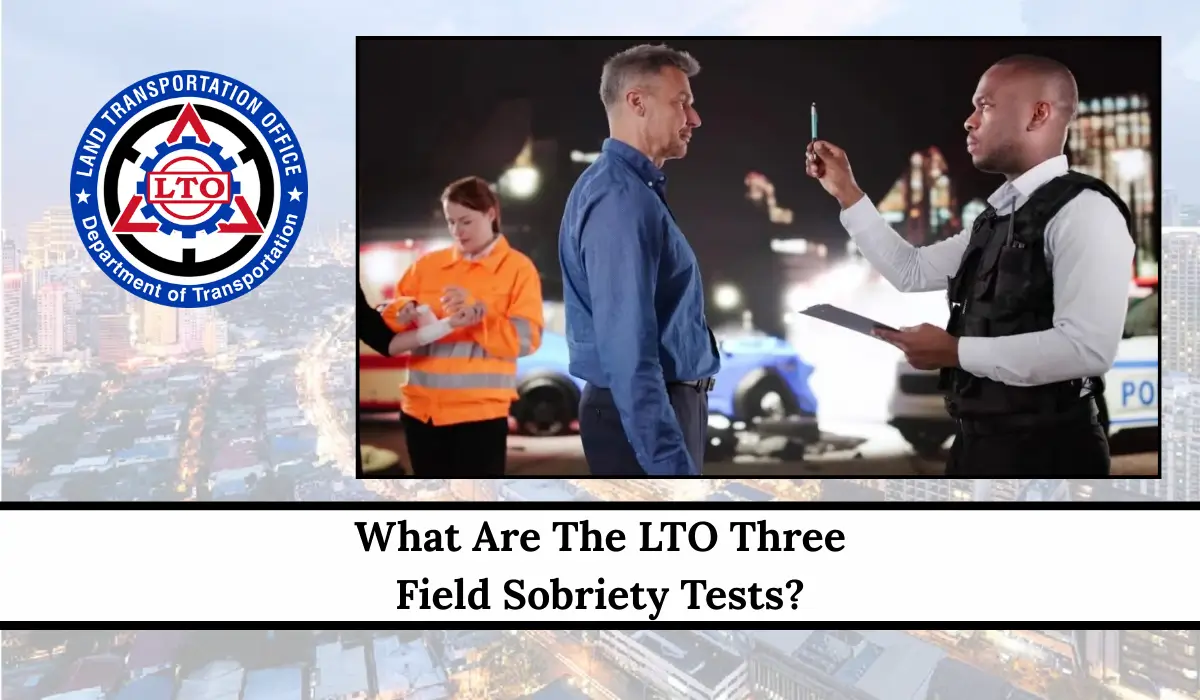
Under this law, drivers who show unsafe behavior on the road, such as swerving or overspeeding, may be stopped by traffic officers and asked to perform a Field Sobriety Test. The LTO Three Field Sobriety Tests include the Walk-and-Turn Test, the One-Leg Stand Test, and the Horizontal Gaze Nystagmus (HGN) Test. These tests check a driver’s balance, coordination, eye movement, and ability to follow instructions to determine whether the driver may be intoxicated.
LTO Field Sobriety Test
The Land Transportation Office (LTO) in the Philippines works to make roads safer for everyone. One of its main goals is to stop drunk driving.
Under the Anti-Drunk and Drugged Driving Law (Republic Act 10586), drivers who show suspicious driving behavior can be stopped by law enforcement officers. For example, officers may stop a driver if they notice:
- Swerving on the road
- Driving between lanes
- Overspeeding
- Driving in a dangerous manner
When this happens, the officer may ask the driver to step out of the vehicle and perform a Field Sobriety Test.

The purpose of the test is simple. It checks whether the driver has control over their body and mind. Alcohol often affects balance, focus, coordination, and eye movement. These tests help officers detect those problems quickly.
The Law Behind the LTO Sobriety Test
The sobriety tests are part of the Anti-Drunk and Drugged Driving Law (Republic Act 10586). This law was enacted on May 27, 2013 and implemented in 2014.
The main purpose of this law is to promote responsible driving and prevent accidents caused by intoxicated drivers. The law allows several agencies to enforce these rules, including:
- Land Transportation Office (LTO)
- Philippine National Police (PNP)
- Authorized traffic enforcement officers
These officers are allowed to:
- Stop vehicles suspected of unsafe driving
- Conduct field sobriety tests
- Use alcohol breath analyzers
- Conduct drug tests if needed
- Impound vehicles of violators
The government introduced these measures to protect lives, property, and public safety. Another important rule is that many enforcement vehicles now carry onboard cameras. These cameras record traffic violations such as swerving or overspeeding. This provides clear evidence before a sobriety test is conducted.
What Is the LTO Field Sobriety Test?
The LTO Field Sobriety Test is a standardized procedure used by law enforcement officers to check whether a driver is intoxicated. It includes several physical and mental tasks. These tasks test the driver’s ability to:
- Maintain balance
- Follow instructions
- Control body movements
- Focus attention
Alcohol and drugs often affect these abilities. When a driver fails to perform these tasks properly, officers may suspect intoxication. The test is usually performed during:
- Traffic stops
- Road checkpoints
- Roadside inspections
The LTO test includes three main components, which we will explain in detail later.
Key Elements Officers Observe During the Test
During the sobriety test, officers look for certain signs that show whether a driver is impaired. ,These signs include several physical and mental abilities.
Balance and Coordination
Alcohol affects the brain and muscles. This makes it harder for a person to maintain balance. Two tests mainly check this ability:
- Walk and Turn Test
- One-Leg Stand Test
If a driver struggles to maintain balance or coordination, it may indicate intoxication.
Eye Movement (Horizontal Gaze Nystagmus)
Alcohol can affect how the eyes move. The Horizontal Gaze Nystagmus test, also called the HGN test, checks for involuntary eye jerking when a person follows a moving object. If the eyes jerk abnormally, it may indicate alcohol impairment.
Cognitive Function
Cognitive function means the ability to think clearly and follow instructions. Drivers must listen carefully and perform tasks exactly as instructed. If a driver:
- Starts too early
- Forgets instructions
- Performs tasks incorrectly
It may show that their mental function is affected.
Motor Skills
Motor skills involve body movement and muscle control. Tests like the One-Leg Stand help officers check whether the driver can control their body movements properly. Poor motor control may suggest intoxication.
Reaction Time
Alcohol slows reaction time. While reaction time is not tested directly, officers can still observe it through the driver’s overall performance during the tests.
The Three Field Sobriety Tests Used by LTO
The LTO uses three standardized field sobriety tests to evaluate drivers. These tests are performed together. Failing even one of them may lead to further testing. The three tests are:
- Walk-and-Turn Test
- One-Leg Stand Test
- Horizontal Gaze Nystagmus (HGN) Test
Let us explain each test in detail.
1. Walk-and-Turn Test
The Walk-and-Turn Test checks a driver’s balance and ability to follow instructions. In this test, the officer asks the driver to walk along a straight line.
How the Test Works
The driver must follow these steps:
- Stand heel-to-toe on a straight line.
- Listen carefully to the officer’s instructions.
- Take nine steps forward, placing heel to toe each time.
- Turn on one foot.
- Take nine steps back in the opposite direction.
During the test, the officer watches the driver’s movements closely.
What Officers Look For
The officer looks for signs such as:
- Starting the test before instructions are finished
- Losing balance while listening to instructions
- Not touching heel to toe while walking
- Stepping off the line
- Using arms to maintain balance
- Taking the wrong number of steps
- Losing balance during the turn
If the driver shows two or more of these indicators, there is a strong chance that their blood alcohol concentration is above the legal limit.
2. One-Leg Stand Test
The One-Leg Stand Test measures a driver’s balance and concentration.
How the Test Works
The officer asks the driver to perform the following steps:
- Stand straight with both feet together.
- Raise one foot about six inches above the ground.
- Keep the raised foot parallel to the ground.
- Count aloud like this:
- One thousand one
- One thousand two
- One thousand three
- Continue counting until the officer tells the driver to stop.
The test usually lasts 30 seconds.
What Officers Look For
During the test, officers watch for signs such as:
- Swaying while balancing
- Using arms for balance
- Hopping to maintain balance
- Putting the foot down before the test ends
If a driver shows two or more of these signs, there is a high chance they are intoxicated.
3. Horizontal Gaze Nystagmus (HGN) Test
The HGN Test checks involuntary eye movements caused by alcohol.
- Nystagmus means uncontrolled jerking of the eyes.
Normally, eyes move smoothly when following an object. But when a person drinks alcohol, the eyes may jerk or move unevenly.
How the Test Works
The officer holds a small object, usually:
- A pen
- A flashlight
- A finger
The driver must follow the object with their eyes while keeping their head still.
The officer slowly moves the object from side to side.
What Officers Observe
Officers look for these signs:
- Jerking when the eye is at maximum movement
- Jerking starting before 45 degrees
- Eyes unable to follow the object smoothly
If four or more clues appear, the driver may have a blood alcohol concentration above the legal limit. This test is considered one of the most reliable sobriety tests.
What Happens If a Driver Fails the Test?
If a driver fails the LTO field sobriety test, the officer may require additional testing. These tests include:
Alcohol Breath Analyzer Test
The driver may be asked to blow into a device called an Alcohol Breath Analyzer (ABA). This device measures the alcohol level in the driver’s breath.
Chemical or Drug Test
If drug use is suspected, officers may require a drug test. This test usually involves:
- Blood sample
- Urine sample
These tests confirm whether alcohol or drugs are present in the driver’s system.
Legal Consequences of Failing the Test
Failing sobriety tests can lead to serious legal consequences. Possible penalties include:
- Heavy fines
- Suspension of driver’s license
- Vehicle impoundment
- Possible imprisonment
The penalties depend on the severity of the violation and whether the driver caused harm or accidents. The law treats drunk driving as a serious offense because it can endanger many lives.
Why the LTO Sobriety Test Is Important
The LTO Field Sobriety Test plays a major role in improving road safety.
1. Prevents Drunk Driving
The test discourages drivers from drinking and driving. Knowing that officers can conduct sobriety tests makes people think twice before driving after drinking.
2. Reduces Road Accidents
Drunk drivers have slower reaction times and poor control. Removing intoxicated drivers from the road reduces accidents.
3. Protects Lives
Every driver shares the road with many people. Sobriety tests help protect:
- Drivers
- Passengers
- Pedestrians
- Cyclists
4. Promotes Responsible Driving
These tests remind drivers to behave responsibly and follow traffic laws.
Signs of Intoxication Drivers Should Know
Sometimes people may not realize they are intoxicated. Here are common signs of alcohol intoxication:
- Confusion or dizziness
- Slurred speech
- Difficulty walking
- Lack of coordination
- Vomiting
- Excessive talking
- Loss of judgment
Alcohol affects people differently. Even if someone does not feel drunk, alcohol can still affect their ability to drive safely. The safest choice is simple.
- Never drive after drinking alcohol.
Important Considerations in Sobriety Testing
Several factors are considered during sobriety testing.
Standardized Procedures
The tests follow standard guidelines. This ensures that all drivers are evaluated fairly.
Officer Training
Officers must receive proper training before conducting these tests. Training helps ensure accurate and fair results.
Environmental Conditions
Road conditions can affect test performance. Factors include:
- Uneven ground
- Poor lighting
- Rain or slippery surfaces
Officers must consider these conditions when evaluating results.
Medical Conditions
Certain medical issues may affect performance during the tests. For example:
- Balance disorders
- Injuries
- Physical disabilities
Officers should consider these factors before making conclusions.
Communication with Drivers
Officers must clearly explain each test before it begins. Drivers must understand the instructions before performing the tasks.
Documentation
Officers record the entire testing process. This includes:
- Driver behavior
- Test performance
- Observations during the test
This documentation may be used as evidence in legal cases.
Public Awareness and Responsible Driving
- Public awareness is an important part of road safety.
- When drivers understand sobriety tests, they also understand the risks of drunk driving.
- Education helps drivers make safer choices.
- Governments and traffic agencies continue to promote campaigns that encourage responsible driving.
- These campaigns remind drivers that one careless decision can change many lives.
FAQs
What are the LTO Three Field Sobriety Tests?
Ans: The LTO Three Field Sobriety Tests are roadside tests used by traffic officers in the Philippines to check if a driver is under the influence of alcohol or drugs. These tests are part of the Anti-Drunk and Drugged Driving Law (Republic Act 10586). Officers ask the driver to perform simple physical and eye movement tasks. These tasks help officers evaluate the driver’s balance, coordination, focus, and ability to follow instructions. If a driver shows signs of impairment during these tests, they may be asked to take additional tests such as a breath analyzer or a drug test.

What are the three components of the LTO Field Sobriety Test?
Ans: The LTO Field Sobriety Test has three main parts that are performed together during roadside inspections. These include the Walk-and-Turn Test, the One-Leg Stand Test, and the Horizontal Gaze Nystagmus (HGN) Test. The Walk-and-Turn checks balance and coordination while walking in a straight line. The One-Leg Stand evaluates the driver’s ability to maintain balance while standing on one leg. The HGN test checks involuntary eye movement when the driver follows a moving object. These three tests help officers determine if alcohol or drugs may be affecting the driver’s ability to drive safely.
Why does the LTO conduct field sobriety tests?
Ans: The LTO conducts field sobriety tests to improve road safety and reduce accidents caused by drunk driving. Alcohol and drugs can affect a driver’s judgment, reaction time, and motor skills. These tests allow officers to quickly identify drivers who may be impaired while driving. By detecting intoxicated drivers early, authorities can remove them from the road and prevent dangerous situations that could harm other drivers, passengers, and pedestrians.
What happens if a driver fails the LTO field sobriety test?
Ans: If a driver fails the field sobriety test, the officer may require additional testing to confirm alcohol or drug impairment. This usually involves an Alcohol Breath Analyzer (ABA) test, which measures the alcohol level in the driver’s breath. If drug use is suspected, a chemical test such as a blood or urine test may also be required. If the results confirm intoxication, the driver may face penalties such as fines, license suspension, vehicle impoundment, or even imprisonment depending on the severity of the violation.
Can a driver refuse to take the LTO field sobriety test?
Ans: Drivers may question or hesitate to take the sobriety test, but refusal can create legal complications. Under the Anti-Drunk and Drugged Driving Law, officers have the authority to conduct sobriety testing when they suspect intoxicated driving. Refusing the test may lead to further investigation or additional legal action. It is generally advised for drivers to cooperate with traffic officers and follow proper procedures during roadside checks.
How accurate are field sobriety tests?
Ans: Field sobriety tests are considered reliable tools for detecting possible intoxication, but they are usually used as a preliminary screening method. These tests help officers observe physical signs of impairment, such as poor balance, slow reactions, or abnormal eye movement. However, to confirm alcohol levels in the body, officers usually perform a breath analyzer test or chemical test. These additional tests provide more accurate measurements of a driver’s blood alcohol concentration.
What signs may indicate a driver is intoxicated?
Ans: Several signs may indicate that a driver is under the influence of alcohol. These include slurred speech, poor balance, confusion, difficulty walking, slow reaction time, and unusual behavior such as excessive talking or lack of coordination. Some drivers may also experience nausea, dizziness, or trouble focusing. If officers observe these signs during a traffic stop, they may ask the driver to perform the field sobriety tests to evaluate their condition.
Why is the LTO sobriety test important for road safety?
Ans: The LTO sobriety test is important because it helps identify drivers who may pose a risk to others on the road. Alcohol impairment reduces a driver’s ability to react quickly and make safe decisions. By detecting intoxicated drivers early, law enforcement officers can prevent accidents and protect the lives of motorists, passengers, and pedestrians. These tests also discourage people from driving after drinking, which promotes responsible driving behavior across the country.
Conclusion
The LTO Three Field Sobriety Tests help officers identify drivers who may be under the influence of alcohol or drugs. These tests check balance, coordination, eye movement, and the ability to follow instructions. The three tests include the Walk-and-Turn, One-Leg Stand, and Horizontal Gaze Nystagmus test. Together, they help improve road safety and prevent accidents. Drivers who fail these tests may face legal consequences and further alcohol or drug testing. The main goal of these procedures is to protect lives and promote responsible driving across the Philippines. Always avoid drinking before driving.