What is the Initial Driver’s License Classification For Applicants of New License? Complete Guide For Beginners
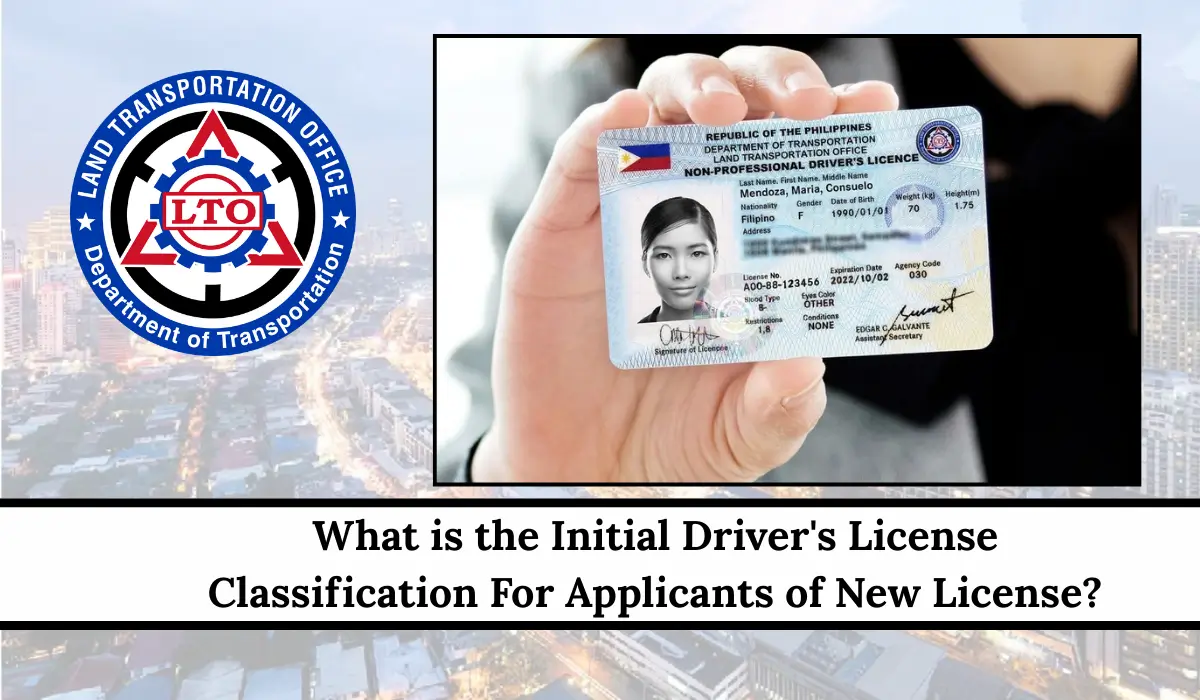
What is the Initial Driver’s License Classification For Applicants of New License? Many new applicants often ask one important question: What is the initial driver’s license classification for applicants of a new license? Some people believe the first license is the Student Driver’s Permit, while others say it is the Non-Professional Driver’s License (NPDL). This confusion happens because both are part of the licensing process in the Philippines.
The Land Transportation Office (LTO) requires all new drivers to first obtain a Student Driver’s Permit. This permit allows beginners to practice driving on public roads while accompanied by a licensed driver. However, it is only a temporary permit and not considered a full driver’s license.
The first official license classification is the Non-Professional Driver’s License. To obtain it, applicants must hold a student permit for at least 31 days, pass the theoretical and practical driving tests, and complete the required medical examination.
Driver’s License Classification
Before discussing the first license classification, it is important to understand what driver’s license classification means.
A driver’s license classification shows the type of driving permission a person has. It tells authorities what type of vehicle the driver is allowed to operate. It also shows the level of experience of the driver.
A driver’s license is a government issued identification document. It proves that a person is legally allowed to drive a vehicle on public roads.
In the Philippines, the Land Transportation Office (LTO) manages the licensing system. The LTO ensures that drivers understand road rules, safety practices, and vehicle operation.
Every license contains DL Codes (Driver’s License Codes). These codes show what type of vehicle the person can drive.

Types of Driver’s Licenses in the Philippines
The LTO provides three main classifications of driver’s licenses.
1. Student Driver’s Permit
A Student Driver’s Permit is the first step for people who want to learn driving.
It allows beginners to practice driving on public roads. However, the student driver must always be accompanied by someone who has a valid driver’s license. Important points about a Student Permit:
- It is a temporary permit
- It allows learning and practice driving
- It requires supervision by a licensed driver
- It is not considered a valid government ID
- It cannot be used for professional driving
This permit is mainly designed to help new drivers gain experience and learn traffic rules safely.
2. Non-Professional Driver’s License
A Non-Professional Driver’s License (NPDL) is considered the initial driver’s license classification for new applicants.
This license allows the driver to operate private vehicles such as cars, motorcycles, and small trucks.
Once a person obtains a Non-Professional Driver’s License, they can drive independently without supervision.
However, this license does not allow drivers to operate vehicles for commercial purposes. Examples of vehicles allowed under this license include:
- Private cars
- Motorcycles
- Tricycles
- Light trucks
- Small passenger vehicles
This license is the most common type for everyday drivers.
3. Professional Driver’s License
A Professional Driver’s License (PDL) is for people who drive vehicles for work or income.
Examples include:
- Bus drivers
- Taxi drivers
- Truck drivers
- Delivery drivers
- Public transport drivers
Professional drivers are responsible for carrying passengers or goods. Because of this responsibility, they must meet stricter requirements.
So What is the Initial Driver’s License Classification?
Now let’s answer the main question clearly.
- The initial driver’s license classification for applicants of a new license is the Non-Professional Driver’s License (NPDL).
However, before applying for this license, applicants must first obtain a Student Driver’s Permit. This creates a learning process that includes two stages.
Stage 1: Student Driver Phase
The applicant learns how to drive under supervision.
Stage 2: Non-Professional License
The applicant becomes a licensed driver who can drive independently.
Because the Student Permit is only temporary, the LTO considers the Non-Professional License as the first official license classification.
Why the Student Permit is Still Important
Even though the Non-Professional License is the first official license, the Student Permit is still required.
- The government introduced this system to improve road safety.
Many new drivers do not have enough experience. The Student Permit allows them to practice driving before receiving a full license. During this stage, drivers learn:
- Road rules
- Traffic signs
- Vehicle control
- Safe driving behavior
This learning period reduces accidents and improves driver responsibility.
Minimum Requirements for New License Applicants
To apply for a driver’s license, applicants must meet several requirements. Here are the common requirements.
Basic Eligibility
Applicants must:
- Be at least 17 years old
- Be physically and mentally fit
- Be able to read and write
- Understand traffic rules
Documents Required
Applicants must prepare the following documents:
- Valid identification
- Birth certificate
- Medical certificate from an accredited clinic
- Completed application form
For the Non-Professional License, the applicant must also present a valid Student Driver’s Permit.
Student Driver’s Permit Requirements
Before applying for a Non-Professional License, the applicant must first obtain a Student Permit.
Requirements for Student Permit
Applicants must submit:
- Application form
- Valid ID
- Birth certificate
- Medical certificate
- Theoretical Driving Course (TDC) certificate
The Theoretical Driving Course teaches basic road knowledge and safety rules. After receiving the Student Permit, the applicant must wait at least 31 days before applying for a Non-Professional License.
Steps to Get a Non-Professional Driver’s License
Once the Student Permit requirement is completed, applicants can apply for a Non-Professional Driver’s License. Here are the steps.
Step 1: Complete the Practical Driving Course
Applicants must learn actual driving skills. Training usually includes:
- Steering control
- Parking
- Road positioning
- Traffic awareness
Step 2: Prepare Required Documents
Bring the following documents to the LTO office.
- Valid Student Permit
- Medical certificate
- Application form
- Driving course certificate
Step 3: Submit the Application
Submit your documents to the LTO licensing office. The staff will review your application.
Step 4: Take the Theoretical Exam
Applicants must pass a written exam. The exam checks knowledge of:
- Traffic signs
- Road rules
- Safety practices
- Driving responsibilities
Step 5: Take the Practical Driving Test
Applicants must demonstrate their driving ability. This test checks if the applicant can safely control a vehicle. The examiner will observe:
- Starting the vehicle
- Turning
- Parking
- Road awareness
- Traffic discipline
Step 6: Pay the Required Fees
After passing the exams, applicants must pay the license fees.
Step 7: Receive the Driver’s License
Once all steps are completed, the applicant receives a Non-Professional Driver’s License. This allows them to legally drive private vehicles.
Driver’s License DL Codes Explained
DL Codes show what type of vehicle a driver can operate. Here are common DL Codes.
Code A
Allows operation of motorcycles and motorbikes
Code A1
Allows operation of tricycles.
Code B
Allows operation of passenger cars.
Code B1
Allows driving light vehicles with automatic transmission.
Code B2
Allows driving light commercial vehicles.
These include vehicles with weight up to 3,500 kilograms.
Why License Classification Matters
Many people think license classification is not important. However, it is very important for several reasons.
1. Legal Permission
The license classification determines what type of vehicle you can legally drive. Driving the wrong vehicle type can result in fines or penalties.
2. Road Safety
Each vehicle requires different driving skills.
For example:
- Driving a motorcycle is very different from driving a truck.
- License classifications ensure drivers receive the right training.
3. Traffic Law Compliance
Authorities check license classifications during traffic inspections. If your license does not match the vehicle you are driving, you may receive a violation ticket.
4. Employment Opportunities
If someone wants to drive professionally, they must upgrade to a Professional Driver’s License. Without the correct classification, they cannot legally work as a driver.
Can Applicants Apply for Professional License Immediately?
In some situations, applicants may apply for a Professional Driver’s License. However, they must meet additional requirements. These include:
- More driving experience
- Additional training
- Higher driving skill level
Professional licenses are usually for people who plan to drive for income.
Common Mistakes New Drivers Make
Many applicants make small mistakes during the license application process. Here are some common problems.
Not Studying Traffic Rules
Many applicants fail the exam because they do not study road signs and traffic rules.
Not Practicing Driving Enough
Practical driving skills are very important. Lack of practice can cause failure in the driving test.
Incomplete Documents
Applicants sometimes forget important documents such as medical certificates or training certificates. This can delay the application process.
Driving Without Supervision
Student drivers must always drive with a licensed driver. Driving alone can result in traffic violations.
Tips for Passing the Driver’s License Exam
If you want to pass the exam easily, follow these simple tips.
Study Traffic Signs
Make sure you understand road signs and signals.
Practice Driving Regularly
Practice helps improve confidence and vehicle control.
Learn Road Safety
Safe driving habits are important for passing the test.
Stay Calm During the Exam
Many people become nervous during the driving test. Try to stay relaxed and focused.
Benefits of Having a Driver’s License
Having a driver’s license offers many advantages.
Freedom of Travel
Drivers can travel without relying on public transportation.
Better Job Opportunities
Many jobs require a valid driver’s license.
Valid Identification
A driver’s license is often accepted as an identification document.
Personal Convenience
Drivers can travel whenever they need without waiting for transport.
FAQs
What is the initial driver’s license classification for applicants of a new license?
Ans: The initial driver’s license classification for new applicants is the Non-Professional Driver’s License (NPDL). This is the first official license that allows a person to drive private vehicles legally. Before applying for this license, the applicant must first obtain a Student Driver’s Permit and hold it for at least 31 days. After completing the required driving practice and passing the exams, the applicant can receive the Non-Professional Driver’s License and drive independently on public roads.
Is the Student Driver’s Permit considered a driver’s license?

Ans: No, the Student Driver’s Permit is not considered a full driver’s license. It is only a temporary permit issued by the Land Transportation Office that allows new drivers to practice driving on public roads. A student driver must always be accompanied by a licensed driver while driving. The permit is mainly designed to help beginners gain experience before applying for an official driver’s license.
Why must applicants get a Student Driver’s Permit first?
Ans: Applicants must obtain a Student Driver’s Permit first because it helps them learn the basics of driving and road safety. During this learning period, drivers can practice controlling the vehicle, understanding traffic rules, and recognizing road signs. This step is important because it prepares new drivers for the written and practical exams required to obtain a Non-Professional Driver’s License.
How long must a Student Permit be held before applying for a Non-Professional Driver’s License?
Ans: A Student Driver’s Permit must be held for at least 31 days before the holder can apply for a Non-Professional Driver’s License. This waiting period allows the learner to practice driving and improve their skills. The practice period also helps the applicant become more confident and prepared for the LTO driving tests.
What vehicles can be driven with a Non-Professional Driver’s License?
Ans: A Non-Professional Driver’s License allows the driver to operate private vehicles. These may include motorcycles, tricycles, passenger cars, and light trucks depending on the DL codes assigned to the license. However, this license does not allow drivers to operate public transport or commercial vehicles for income.
Can a Non-Professional Driver’s License holder drive for work?
Ans: No, a Non-Professional Driver’s License holder cannot legally drive vehicles for employment or commercial purposes. Drivers who want to operate vehicles for income, such as taxis, buses, or delivery trucks, must apply for a Professional Driver’s License. This license has stricter requirements and is meant for people who work as drivers.
What tests must applicants pass to get a Non-Professional Driver’s License?
Ans: Applicants must pass two main exams to obtain a Non-Professional Driver’s License. The first is the theoretical exam, which checks the applicant’s knowledge of traffic rules, road signs, and driving safety. The second is the practical driving test, where the applicant must demonstrate their ability to safely control and operate a vehicle on the road.
Is the Student Driver’s Permit accepted as a valid government ID?
Ans: No, the Student Driver’s Permit is generally not accepted as a valid government identification card. It is mainly issued for learning and practice purposes only. Once a person obtains a Non-Professional Driver’s License, it can then be used as an official identification document in many situations.
What are DL codes in a driver’s license?
Ans: DL codes, also known as Driver’s License Codes, indicate the type of vehicle a driver is allowed to operate. Each code represents a specific vehicle category such as motorcycles, tricycles, or passenger cars. These codes ensure that drivers only operate vehicles they are trained and qualified to drive.
Can a new applicant apply directly for a Professional Driver’s License?
Ans: In some cases, applicants may apply for a Professional Driver’s License if they meet all the required qualifications and experience. However, most new drivers first obtain a Student Permit and then a Non-Professional Driver’s License. After gaining driving experience, they can later upgrade their license to a Professional classification if they plan to drive vehicles for work.
Conclusion
Getting a driver’s license is an important step for new drivers. Many people believe the Student Driver’s Permit is the first license, but it is only a temporary permit used for learning and practice. It allows beginners to drive while being supervised by a licensed driver. The first official driver’s license classification for new applicants is the Non-Professional Driver’s License (NPDL). After holding a Student Permit for at least 31 days and passing the required exams, applicants can receive this license. It allows drivers to operate private vehicles legally and independently while following road rules and safety guidelines.