LTO: Motorcycle Plates Available at Select Areas
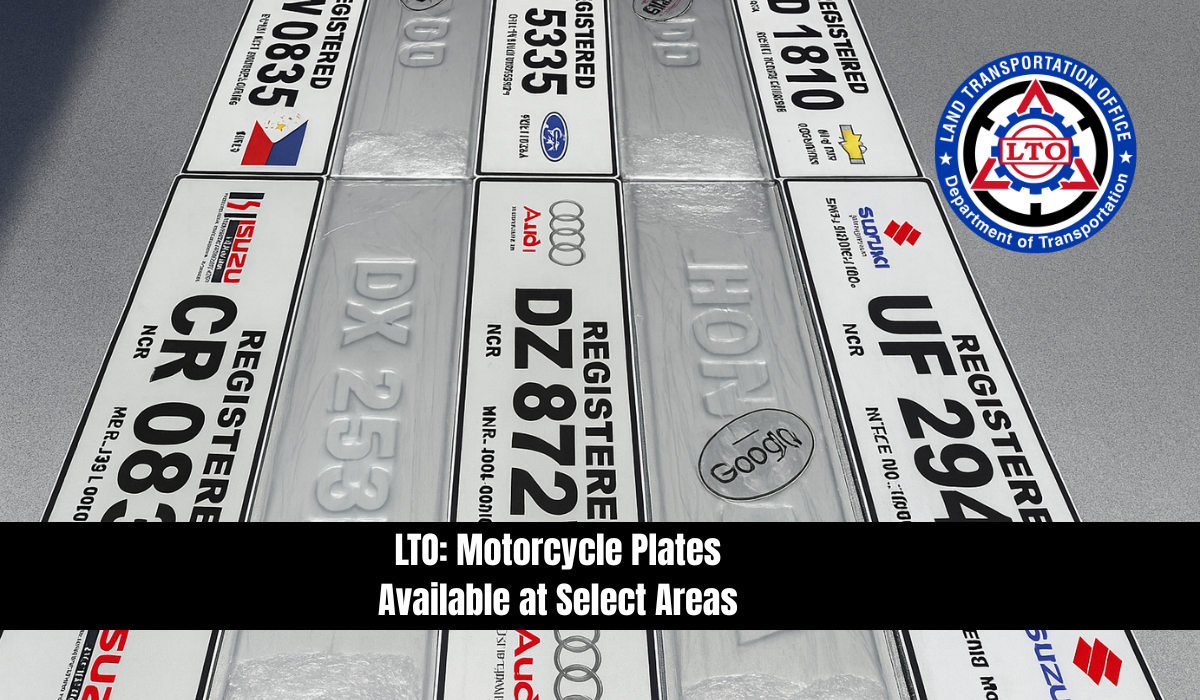
LTO: Motorcycle Plates Available at Select Areas. In a proactive move to address the long-standing backlog in license plate issuance, the Land Transportation Office (LTO) has launched an on-ground initiative allowing motorcycle riders to receive their long-overdue motorcycle plates directly at roadside checkpoints. With millions of motorcycle owners still awaiting their official plates, this latest campaign seeks to streamline distribution and bring relief to the riding public particularly in heavily congested urban areas.
This article explores the new LTO patrol vehicle program, regional rollouts, the Palit-Plaka initiative, and how riders can now claim their plates without hassle or penalty.
LTO License Plate Distribution at Checkpoints
The LTO has taken an aggressive approach to clearing its backlogs by equipping its mobile patrol units with unissued motorcycle plates. These vehicles will be stationed at strategic checkpoints in select regions, where they will stop motorcycles without license plates and, if available, issue the plate on the spot to the rider.
Here’s How It Works:
- An LTO patrol vehicle flags down a motorcycle without a license plate.
- The enforcer checks whether the plate is available in the system and present in the patrol vehicle.
- If the motorcycle plate is available, it is handed over to the rider immediately.
- If the plate is not available, the officer will assist the rider in tracking the plate’s status in the system.
This new system is designed not to penalize riders but to encourage proper registration by removing fear and uncertainty.
“This time, they should no longer be afraid because there’s no penalty if they have no plates. Instead, their plates will be given to them on the spot,” said LTO chief Assistant Secretary Vigor Mendoza.
Initial Rollout in High-Demand Regions
According to the agency, the program is being implemented first in regions with the highest volume of unissued motorcycle plates, including:
| Region | Coverage Areas |
|---|---|
| Metro Manila | NCR cities and municipalities |
| Central Luzon | Pampanga, Bulacan, Nueva Ecija, Tarlac, Zambales, etc. |
| Calabarzon | Cavite, Laguna, Batangas, Rizal, and Quezon |
These areas account for the majority of motorcycles registered between 2017 and recent years that have yet to receive physical plates.
What This Means for Riders
The move comes shortly after the Department of Transportation (DOTr) announced the clearing of the 5.4 million motorcycle plates backlog. With this inventory now available, the LTO is under pressure to distribute the plates efficiently.
Many motorcycle owners have been riding for years with temporary documents or paper plates due to production delays. This new initiative is the LTO’s answer to bring physical compliance up to speed with system records.
The “Palit-Plaka” Program: Who Qualifies?
In conjunction with the new checkpoint campaign, the LTO is also reviving the Palit-Plaka initiative. This is targeted at motorcycle owners who fall under these categories:
- Motorcycles registered in 2017 or earlier that have not yet received an actual license plate.
- Motorcycle owners assigned a seven-character plate (temporary) who now need to replace it with an official permanent plate.
Palit-Plaka Eligibility Table
| Condition | Eligible for Palit-Plaka? |
|---|---|
| Motorcycle registered before 2017 | Yes |
| Temporary 7-character plate assigned | Yes |
| Already received a physical plate | No |
| Plate issued but lost/stolen | No (Apply for replacement instead) |
Owners who qualify are encouraged to visit designated desks and kiosks being set up across major motorcycle parking zones, government offices, and LTO branches.
Collaboration with Local Stakeholders
To ensure the success of this campaign, LTO regional and district offices have been directed to coordinate with:
- Local Government Units (LGUs)
- Motorcycle Riders’ Groups
- Tricycle Operators and Drivers Associations (TODAs)
Awareness campaigns, pop-up information booths, and assistance kiosks will be deployed across key motorcycle hubs such as terminals, malls, and business centers.
“We are not just solving a logistics issue—we are creating a culture of compliance and trust,” Mendoza added.

How to Check Motorcycle Plate Availability
If you’re unsure whether your motorcycle plate is now available, here’s a simple guide to check:
- Visit the LTO Plate Inquiry System via the LTO portal.
- Input your vehicle’s plate number or MV file number.
- Check the status of your plate (Available / In-Transit / Not Yet Available).
- If marked Available, proceed to your LTO branch or check if your area is part of the patrol vehicle distribution program.
What If My Plate Is Still Unavailable?
Don’t worry—LTO patrol officers will still assist you by checking their system and verifying when and where your motorcycle plate will be delivered.
You can also track updates via:
- LTO Official Website: https://lto.gov.ph
- LTO Facebook Page: Frequent updates on schedules and locations
- Local District Offices: Inquire in person with your OR/CR
Important Reminders for Riders
To ensure a smooth process during LTO license plate distribution, keep the following in mind:
- Always carry your Official Receipt (OR) and Certificate of Registration (CR) when riding.
- Make sure your details (name, plate number, MV number) are correct and up to date.
- Be respectful to enforcers—they are there to assist, not penalize.
- If flagged down, cooperate and follow verification procedures.
LTO Commitment to Service
The LTO license plate backlog has been a national concern for several years. With this mobile checkpoint distribution model, the agency is taking tangible steps toward a more efficient and people-friendly service model.
This is not just about plates it’s about public trust, safety, and system accountability. By proactively giving plates at patrol stops and removing penalties, the LTO is redefining how government services can be both accessible and citizen-centric.
Benefits of the LTO Motorcycle Plate Distribution Initiative
| Benefit | Description |
|---|---|
| No penalty for plate delay | Riders won’t be fined if plates are unavailable but registered |
| On-the-spot issuance | If the plate is in the patrol vehicle, it is handed out immediately |
| Helps clear plate backlog | Efficient distribution helps close the gap on the 5.4M backlog |
| Nationwide awareness campaign | LGUs, riders, and tricycle groups are being mobilized to help |
| Assists with tracking and verification | Riders get real-time help tracking their plates at checkpoints |
FAQs About LTO patrol vehicle
Is there a penalty for not having a license plate if I haven’t received one from LTO yet?
Ans: No, under the new program, there is no penalty if you haven’t received your official motorcycle plate. If flagged at a checkpoint, the officer will check if your plate is available and may hand it to you on the spot.
How do I know if my motorcycle plate is ready for pickup?

Ans: You can visit the LTO Plate Inquiry System on the LTO website, input your plate or MV file number, and check the status. If marked “Available,” visit your nearest LTO or check if there is an LTO patrol vehicle in your area.
Who can apply under the Palit-Plaka program?
Ans: Motorcycle owners who registered their vehicles in 2017 or earlier or received temporary 7-character plates are eligible. They can claim their new plates at designated kiosks or during patrol vehicle distributions.
Conclusion
The LTO patrol vehicle initiative and Palit-Plaka program mark a significant milestone in addressing the plate issuance crisis in the Philippines. By combining on-the-ground assistance, online verification tools, and inter-agency cooperation, the LTO is finally turning a major corner.