How To Apply Certificate of Public Convenience (CPC) In LTFRB in Philippines 2026?
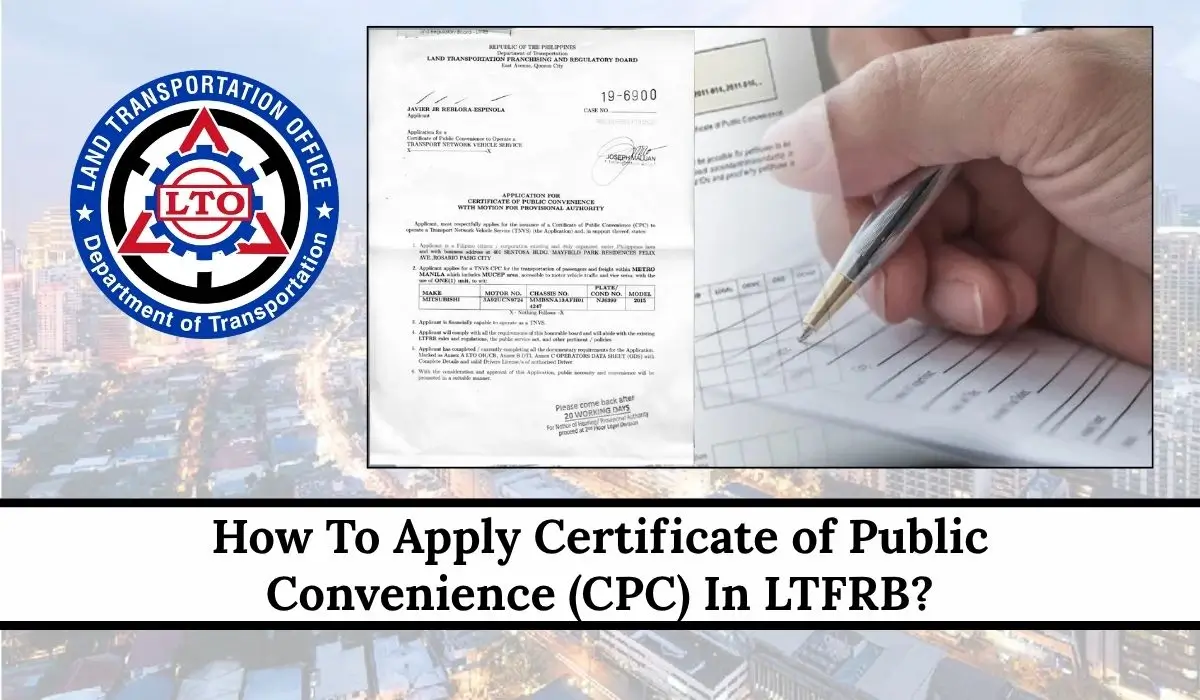
Apply Certificate of Public Convenience (CPC) In LTFRB. Starting a public transport business in the Philippines can be an excellent opportunity. But before you begin operating your jeepney, bus, UV Express, taxi, or van, you must first get a legal permit. This permit is called a Certificate of Public Convenience (CPC), and it is issued by the Land Transportation Franchising and Regulatory Board (LTFRB).
Many people think applying for a CPC is very difficult. Yes, the process includes documents, fees, and steps but if you understand everything clearly, it becomes simple and manageable.
In this complete guide, you will learn everything about CPC from its meaning to requirements, a step-by-step process, fees, mistakes to avoid and tips.
What Is a Certificate of Public Convenience (CPC)?
A Certificate of Public Convenience (CPC) is an official permit issued by the LTFRB that allows a person or company to operate public transport legally.
This includes:
- Jeepneys
- Buses
- UV Express vans
- Taxis
- TNVS (like Grab)
In simple words, CPC is your legal authority to transport passengers or goods on approved routes.
Why CPC Is Important
- Makes your transport business legal
- Builds trust with passengers
- Protects you from fines and penalties
- Allows expansion and growth
Without a CPC, your vehicle can be:
- Fined
- Impounded
- Banned from operation
Legal Basis of CPC in the Philippines
The CPC is issued under the Public Service Act (Commonwealth Act No. 146). This law gives authority to the LTFRB, under the Department of Transportation (DOTr), to regulate public transport.
Purpose of the Law
- Ensure passenger safety
- Maintain service quality
- Control transport routes
- Avoid overcrowding of vehicles
The law ensures that only qualified operators can run transport services.
Types of CPC Applications You Should Know
Before applying, it is important to understand the different types of CPC applications:
1. New Application
For first-time applicants who want to start a transport business.
2. Renewal / Extension of Validity
For operators who want to renew their CPC before it expires.
3. Amendment of CPC
Used when:
- Changing routes
- Changing ownership
- Adding or reducing units
4. Dropping and Substitution
For replacing old vehicles or units.
5. Reinstatement
For expired CPCs that you want to reactivate.
Choosing the correct type saves time and avoids rejection.
Basic Requirements for CPC Application
Before going to LTFRB, prepare all required documents carefully.
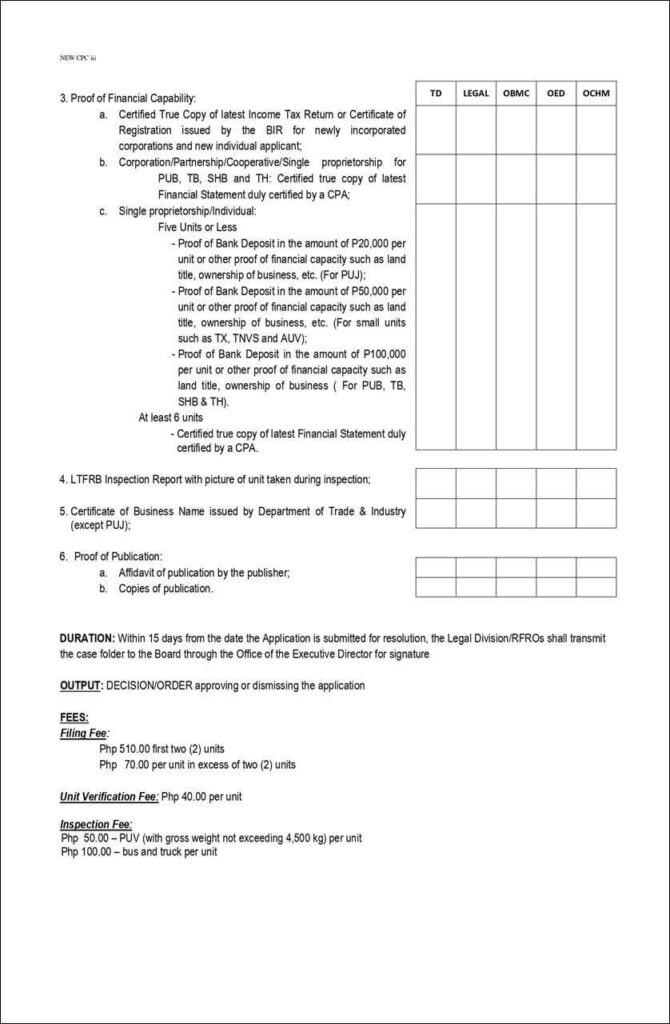
Essential Documents List
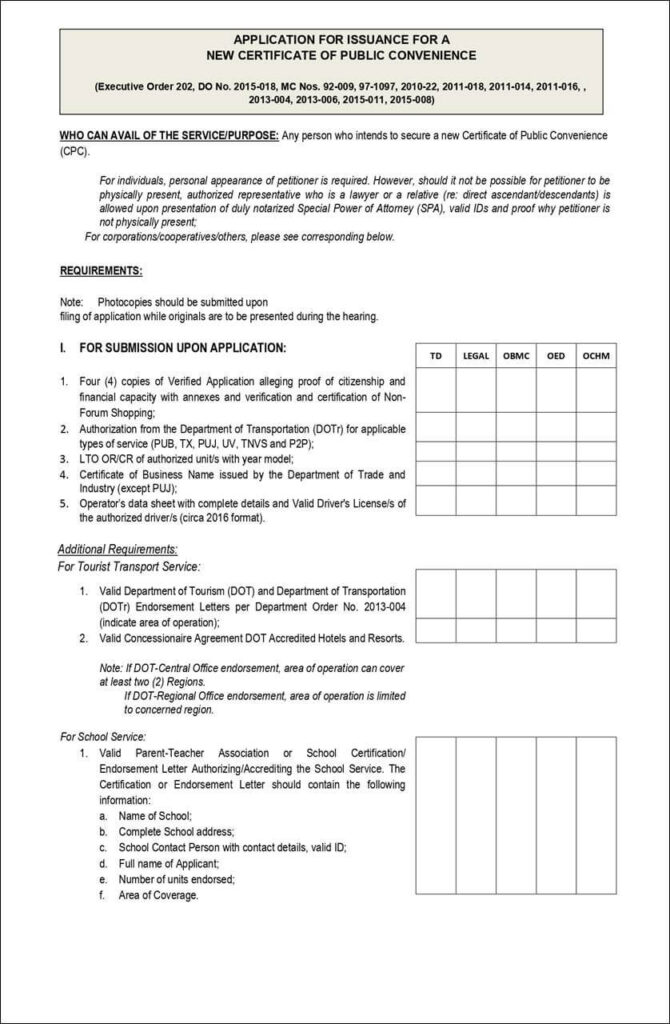
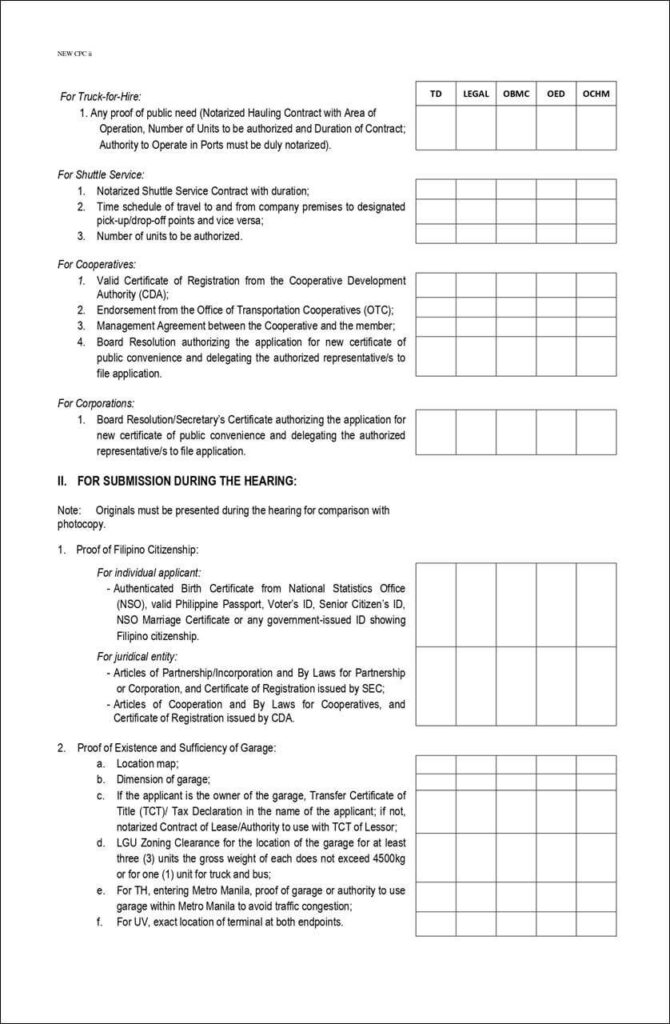
- Completed CPC Application Form
- Valid government ID
- OR/CR (Vehicle Registration)
- Deed of Sale (if applicable)
- BIR Certificate of Registration
- Mayor’s Permit or Business Permit
- DTI or SEC Registration
- Route Map or Garage Plan
- Insurance (Passenger & Vehicle)
- Affidavit of Financial Capability
Important Tips
- Bring both original and photocopies
- Check all details (name, plate number, route)
- Ensure documents are updated
Missing documents can delay your application.
Who Can Apply for a CPC?
According to the law, the applicant must meet these conditions:
- Must be a Filipino citizen or company (at least 60% Filipino-owned)
- Must show financial capability
- Must prove the service will benefit the public
These rules ensure only capable and responsible operators are approved.
Online Process to Apply For CPC
Now let’s understand the full process in a simple step-by-step way:
Step 1: Prepare Your Documents
Gather all the required documents before applying. Make sure everything is complete and correct.
Double-check:
- Names
- Plate numbers
- Routes
Step 2: Submit Your Application
Go to the nearest LTFRB regional office and submit your application.
Some applications can also be done online through LTFRB systems.
Step 3: Pay the Required Fees
After submission, you will pay the required fees at the cashier.
Keep your receipt safe because it is proof of payment.
Step 4: Publication of Notice
You may be required to publish a Notice of Hearing in a newspaper.
This informs the public about your application.
Step 5: Attend the Hearing
LTFRB will schedule a hearing.
You must attend this hearing. Missing it can delay or cancel your application.
Step 6: Vehicle Inspection
Your vehicle will be checked to ensure:
- Safety
- Roadworthiness
- Proper condition
Garage inspection may also happen.
Step 7: Wait for Approval
After review and evaluation, LTFRB will decide on your application.
Step 8: Receive Your CPC
Once approved, you will receive your CPC.
It will include:
- Approved routes
- Number of units allowed
Now you can legally operate your transport service.
CPC Fees and Charges
Here is a simple breakdown of fees:
Basic Fees
- Application Fee: ₱510
- Additional Units: ₱70 per unit
- Verification Fee: ₱40 per unit
- Legal Research Fee: ₱10
Inspection Fees
- Light Vehicles: ₱50
- Buses/Trucks: ₱100
Fees may change, so always confirm with LTFRB.
Processing Time and Validity
Processing Time
- Document Review: 1–3 months
- Hearing & Inspection: 2–4 months
Total time: 3 to 6 months
Validity of CPC
- Valid for 5 years
Always renew before expiry to avoid penalties.
Download CPC Application Form
You can download the CPC form from the official LTFRB website.
Fill it carefully:
- No erasures
- Clear handwriting
- Correct details
Mistakes can delay your approval.
Video Guide
Common Mistakes to Avoid
Many applicants face delays because of simple mistakes.
Avoid These Errors
- Missing documents
- Wrong route details
- Skipping hearings
- Not publishing notice
- Expired permits
Tip: Always keep copies of all documents.
Policy Guidelines For CPC Issuance
LTFRB follows specific policies before approving CPC:
1. Public Need
There must be a need for your service in that route.
2. Competition
- Avoid monopoly
- Allow fair competition
3. Route System
- New routes may be approved
- Existing routes may allow new operators
Operational Rules After Getting CPC
After approval, you must follow rules:
Service Quality
- Maintain your vehicle
- Ensure passenger safety
Route Compliance
- Follow only approved routes
Vehicle Maintenance
- Keep vehicles roadworthy
Legal Compliance
- Follow LTFRB regulations
Rate and Fare System
LTFRB controls fare rates.
Key Points
- Fare changes require approval
- Public hearing is needed
- Pricing should be fair
This protects passengers from overcharging.
Financial Capability Requirement
Applicants must prove financial strength.
Examples
- Bank certificate
- Income records
- Investment proof
For larger fleets (5+ units), stricter financial checks apply.
Technical Evaluation
Vehicles must meet standards:
- Good condition
- Safe for passengers
- Proper design
Failure can lead to rejection.
Route Measured Capacity (RMC)
RMC helps determine if a route needs more vehicles.
It ensures:
- Balanced transport supply
- Avoid overcrowding
Provisional Authority (PA)
You can apply for a Provisional Authority (PA).
Benefits
- Temporary operation
- Valid for about 3 months
This allows you to start early while CPC is processing.
Benefits of Having a CPC
Having a CPC gives many advantages:

Legal Protection
Operate without fear of penalties.
Business Growth
Expand routes and services.
Customer Trust
Passengers feel safer.
Government Support
Access programs and benefits.
Challenges in CPC Application
Some common challenges include:
- Long processing time
- Strict requirements
- Document verification delays
Solution: Prepare everything properly before applying.
Tips For Fast Approval
Here are some helpful tips:
- Submit complete documents
- Double-check all details
- Attend all hearings
- Follow instructions carefully
- Keep copies of everything
FAQs
Is CPC mandatory for public transport?
Ans: Yes, a Certificate of Public Convenience (CPC) is mandatory for anyone who wants to operate public transport legally. Without this certificate, you cannot run your vehicle for passenger service, and doing so may lead to fines, penalties, or even vehicle impoundment.
How long does it take to get a CPC?
Ans: The process of getting a CPC usually takes around 3 to 6 months. This depends on how complete your documents are, how fast the verification process goes, and the schedule of hearings and inspections by the LTFRB.
Can I operate without a CPC?
Ans: No, operating without a CPC is illegal. If caught, you may face serious penalties, including fines and confiscation of your vehicle. It is always better to complete the legal process before starting operations.
How long is a CPC valid?
Ans: A CPC is generally valid for 5 years. After that, you must renew it to continue operating legally. Keeping track of your expiration date is very important to avoid interruptions.

Can I renew my CPC before it expires?
Ans: Yes, you can and should renew your CPC before it expires. Early renewal helps you avoid delays and ensures that your transport business continues without any legal issues.
What happens if my CPC expires?
Ans: If your CPC expires, you cannot legally operate your vehicle. You may need to apply for reinstatement, which can take time and may involve additional requirements and penalties.
Do I need a hearing for CPC approval?
Ans: Yes, most CPC applications require a hearing. You must attend this hearing as scheduled by LTFRB. Missing the hearing can delay your application or even lead to denial.
Can I apply CPC online?
Ans: Some LTFRB offices allow online applications through their portal. However, certain steps like document verification, hearings, or inspections may still require physical presence.
What vehicles need a CPC?
Ans: Vehicles used for public transport such as jeepneys, buses, UV Express vans, taxis, and TNVS services all require a CPC to operate legally in the Philippines.
What is Provisional Authority (PA)?
Ans: Provisional Authority (PA) is a temporary permit that allows you to operate while your CPC application is still being processed. It is usually valid for a limited time, around 3 months.
Conclusion
Getting a Certificate of Public Convenience (CPC) from the LTFRB is an important step for anyone who wants to run a legal public transport business in the Philippines. While the process may look long, it becomes simple when you follow the right steps and prepare complete documents. A CPC not only keeps your business legal but also builds trust with passengers and helps you grow. Always follow LTFRB rules, attend hearings, and renew on time. In the end, having a CPC gives you safety, stability, and peace of mind for your transport business.